
Actions Have Consequences: Why I’m More Worried Now Than at Any Time Since 9/11
The Steady State | Adrian Snead

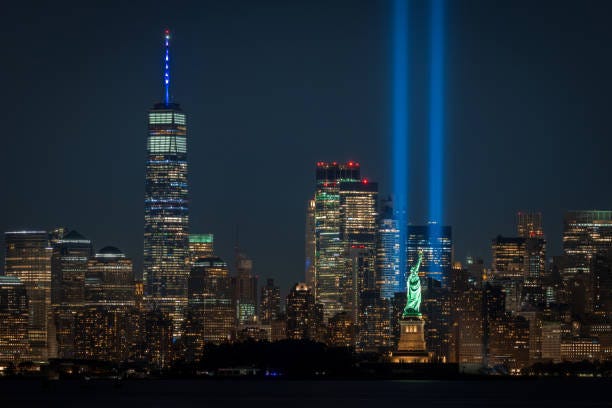
I’m more worried about a major terrorist attack today than at any point since 9/11. And the reason is simple: the Trump administration is systematically hollowing out the very institutions designed to protect us—all in service of political loyalty.
When Truth Bows to Politics
The administration celebrates taking a “chainsaw” to the government. But what it really means is this: if your work contradicts the President’s preferred story, you’re gone. History—from the Soviet Union to Saddam Hussein’s Iraq—shows that when truth is forced to yield to politics, institutions corrode, real threats are missed, and employees learn to stay silent rather than risk their jobs.
Silencing the Messengers
Recent firings drive this home:
CDC Director Susan Monarez was dismissed less than a month into her tenure after refusing to bend vaccine guidance to political pressure. Several senior CDC officials resigned in protest, warning that public health had been “weaponized.”
BLS Commissioner Erika McEntarfer was fired hours after releasing job numbers that showed the economy slowing. Critics said the removal signaled that basic government statistics were no longer safe from political manipulation.
Lt. Gen. Jeffrey Kruse, head of the Defense Intelligence Agency, was ousted after briefing Congress that U.S. strikes on Iran had only caused temporary setbacks to its nuclear program—contradicting the President’s claim that the facilities were “destroyed.”
Hollowing Out National Security
Less publicized—but deeply dangerous—are the administration’s actions against rank-and-file professionals at DOJ, the FBI and DHS .
The Justice Department’s National Security Division has experienced a significant “brain drain” as career terrorism and counterintelligence lawyers leave.
At the FBI, agents trained for counterterrorism were reassigned to immigration cases and even D.C. street patrols; only recently, as Iranian threats escalated, were some returned to their core mission. Agents have also been demoted or fired simply for knowing former agent Peter Strzok—or for kneeling to de-escalate tensions during the George Floyd protests.
And in a move that borders on reckless, the administration put Thomas Fugate, a 22 year old former Trump campaign worker with no relevant experience in charge of the Center for Prevention Programs and Partnerships, at the very office in the Department of Homeland Security meant to stop radicalization before it starts.
The Cost of Blinding Ourselves
These purges and reassignments erode America’s ability to detect and prevent threats. They deprive Congress and the public of honest assessments, create a false sense of security, and drive out honorable professionals trying to protect the country.
Meanwhile, our foreign policy choices—military strikes on Iran, indifference to Palestinian suffering, and cuts to humanitarian aid—are sowing resentment abroad. Americans forget, but adversaries remember. They don’t live in a 24-hour news cycle. They wait, they plan, and they know revenge is best served cold.
A Counterterrorism Parable
The Heisenberg Uncertainty Principle tells us you can’t know both a particle’s position and velocity with precision. Counterterrorism works the same way: the more we blind ourselves, the less we know about either direction or speed of the threats we face. Right now, we’re choosing blindness on both fronts.
I’m not predicting another 9/11. But I am saying this: our defenses are weaker than they’ve been in decades. That is something every American should be worried about.
Adrian Snead is a former counsel and foreign policy advisor to Sen. Jeff Merkely (D-OR). He is a member of The Steady State.
Founded in 2016, The Steady State is a nonpartisan, nonprofit 501(c)(4) organization of more than 300 former senior national security professionals. Our membership includes former officials from the CIA, FBI, Department of State, Department of Defense and Department of Homeland Security. Drawing on deep expertise across national security disciplines including intelligence, diplomacy, military affairs and law, we advocate for constitutional democracy, the rule of law and the preservation of America’s national security institutions.