
Blinding Five Eyes: A Self-Inflicted Wound
The Steady State | by Charles A. Ray

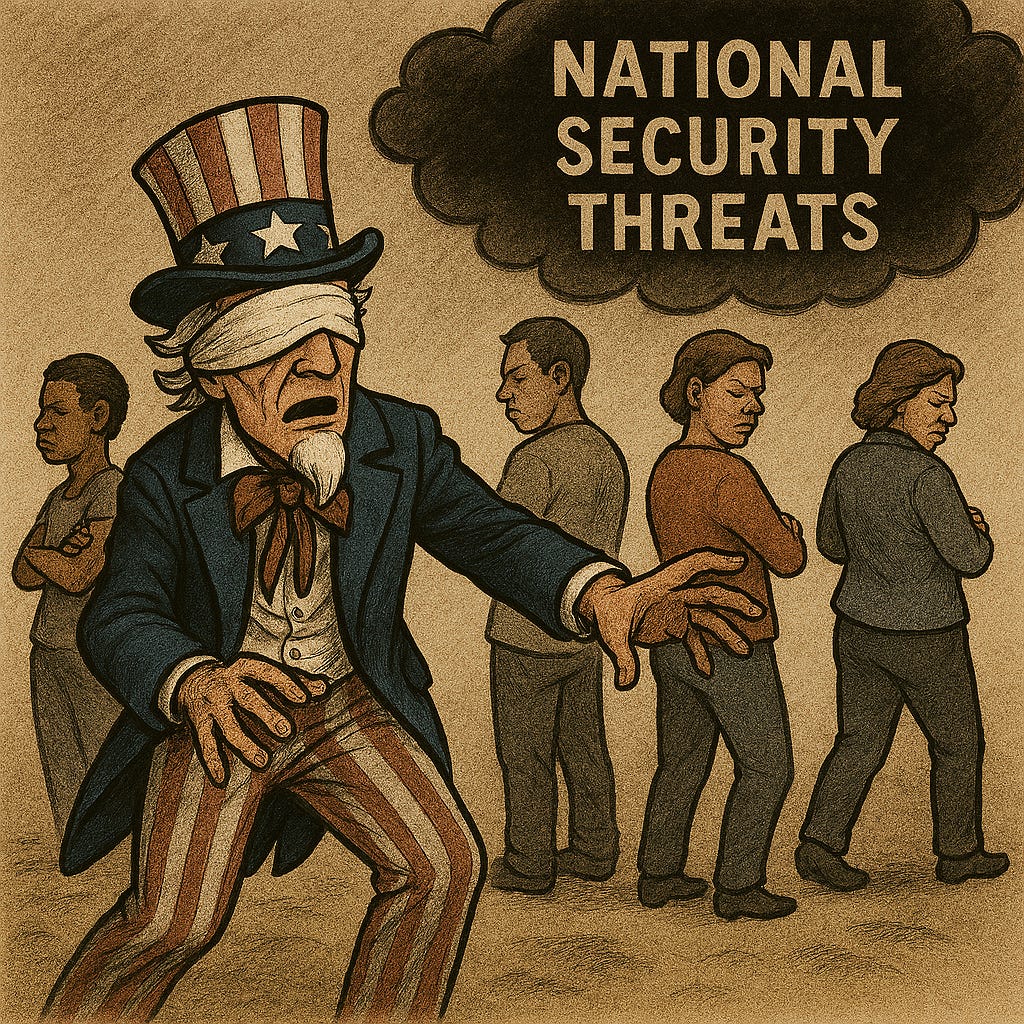
Since World War II, the United States has been involved in several international intelligence-sharing arrangements that were forged during the war. One of the most prominent of these is the ‘Five Eyes” alliance, which facilitates the sharing of signals intelligence among the U.S., the UK, Australia, Canada, and New Zealand. The U.S. has benefited from this alliance in several ways, most notably in receiving information from Canada on Russian activities in the Arctic. In this area, Canada has many more extensive holdings than the United States. The Five Eyes alliance’s operations have been crucial in tracking threats such as terrorism and cyber warfare, and its commitment to mutual defense and protection against several threats has been vital to U.S. national security.
These exchanges have been open and productive for nearly 80 years, helping the U.S. and its allies form a common picture of global threats and to develop paths to successful negotiations with adversaries. In light of this, the decision by Tulsi Gabbard, U.S. Director of National Intelligence, not to share information on the Russia-Ukraine peace negotiations with the Five Eyes is inexplicable. Reaction within the American intelligence community to this unexplained move has been mixed. Some insist that this is a common and essential move. In contrast, others believe that shutting off our Five Eyes partners from key information risks them retaliating and shutting the U.S. off from key matters in their regions. As someone who has not only worked in intelligence but also been involved in diplomatic negotiations, I agree with the latter.
The alliance was already under strain due to U.S. actions, following revelations that U.S. officials shared sensitive details of plans to attack Yemen’s Houthis on a Signal messaging group, to which a journalist had been mistakenly added. This did nothing to improve the faith of Five Eyes partners in the ability of American officials to keep secrets. Gabbard’s decision to cut them out of the loop on an issue as crucial as the Russia-Ukraine conflict only adds to the erosion of confidence. There were already concerns about how the Five Eyes would react to Gabbard even before her confirmation. This latest move can only confirm for some of them that their concerns about her, in particular her apparent sympathy for Russia, were well-founded.
The potential impact on U.S. national security could be profound. By cutting off Five Eyes from this information, we could be leaving ourselves blind to some future threat that was just off our radar, but was seen by one of our ‘allies.’
There is no one so blind as he who refuses to see.
Charles A. Ray spent 20 years in the U.S. Army with two tours in Vietnam. He retired as a senior US diplomat, serving 30 years in the U.S. Foreign Service, with assignments as ambassador to the Kingdom of Cambodia and the Republic of Zimbabwe, and was the first American consul general in Ho Chi Minh City, Vietnam. He also served in senior positions with the Department of Defense and is a member of The Steady State.
Founded in 2016, The Steady State is a nonpartisan, nonprofit 501(c)(4) organization of more than 290 former senior national security professionals. Our membership includes former officials from the CIA, FBI, Department of State, Department of Defense, and Department of Homeland Security. Drawing on deep expertise across national security disciplines, including intelligence, diplomacy, military affairs, and law, we advocate for constitutional democracy, the rule of law, and the preservation of America’s national security institutions.
An abusive narcissist will isolate their victim from friends, family and allies, until they have nowhere else to turn. Every single action by this regime mirrors that reality.
As a former investigator on the House intelligence committee, it is painful to watch Republican majority congressional leaders turn a blind eye —- when the executive branch blindsides our most important intelligence assets. And where are the Democrats?