
From Fighting Corruption Abroad to Fighting It at Home
A 40-year veteran of the U.S. State Department/Foreign Service examines the emerging corruption in his own country.


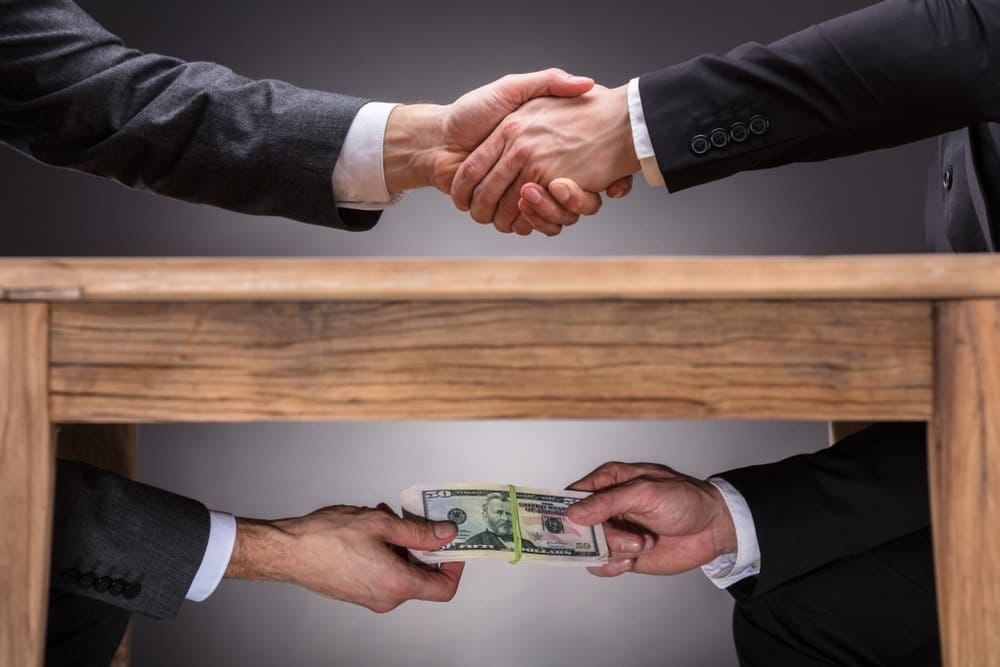
Fighting corruption overseas has been a long-standing and integral piece of American diplomacy. Beyond advocating for important American values, fighting corruption globally advances stability, helps American companies and U.S. goods and services compete successfully around the world, and increases American prosperity. My experience fighting corruption abroad leads me to worry even more about patterns that are emerging here at home.
Trump’s Policy on Corruption - Then and Now
The first Trump Administration’s National Security Strategy (NSS),signed by President Trump in 2017, makes for interesting reading given today’s headlines.
That NSS notes:
“We are a nation of laws, because the rule of law is the shield that protects the individual from government corruption and abuse of power, allows families to live without fear, and permits markets to thrive.”
And that:
“Using our economic and diplomatic tools, the United States will continue to target corrupt foreign officials and work with countries to improve their ability to fight corruption so U.S. companies can compete fairly in transparent business climates.”
The NSS even states “[c]orruption and weak governance threaten to undermine the political benefits that should emerge from new economic opportunities.”
The points in this NSS, which, again, President Trump signed off on in 2017, stand in brutal contrast to the current Trump Administration’s actions. Telling, perhaps, is the fact that none of this language made it into his 2025 National Security Strategy.
Much of my lengthy diplomatic career focused on advancing Americans’ economic well-being, including by engaging foreign governments, companies, and interest groups to fight corruption and to institute and maintain sound laws, regulations, and legal procedures. This work was a part of the job in advanced industrialized countries such as Germany and Japan, some G-7 partners even allowed bribes to foreigners to be tax write-offs, thus almost institutionalizing bribery and corruption, as well as in emerging market countries.
The Consequences of Corruption Abroad and at Home
Reasons to fight for rule of law and against corruption are straightforward. If foreign companies can use bribes to win a contract or can pay off a judge to get a favorable decision or get out of obeying a law or regulation that still applies to the American firm, American commerce suffers. Bribes and other forms of corruption can cause our firms and products to lose out on millions, or even billions of dollars, in sales. Bribes and corruption can tilt systems abroad against U.S. companies winning contracts and/or cause foreign judges and other officials to rule against our companies in contractual and other trade disputes. Foreign corruption costs our companies and farmers, and ranchers lost sales and hurts the American workers they employ.
But corruption also hurts the country where it takes place.
Bribes, fixed contracts, and buying off judges and other officials breed cynicism and distrust in a country’s rulers, systems, and institutions. Bribery and other shady or illicit practices can become the norm. Prices for projects and services get bloated and the final product shoddy, sub-standard, or even dangerous as a result of kickbacks, off-books payments, and other shady deals. Corruption becomes a cancer, a rot that can pervade a society and take years to weed out before a country’s public regains faith in its leadership and institutions.
Remembering this aspect of my work as a 40-year veteran of the U.S. State Department/Foreign Service, I can’t help but think we need to examine what’s happening today at home.
What’s Happening Here and Now
Reports of payments for government favors are a continuing item in U.S. traditional and electronic media. There are questions about Qatar’s gift of a Boeing 747 that had been the royal family’s, and the costs to the American taxpayer to refurbish it and make it secure for the President’s use. Trump’s White House ballroom was supposed to be built at no cost to the American taxpayer; it was going to be built through “private”, off-book contributions. There has been no competitive bidding process. The price tag for the project has risen to at least $500 million, may go higher, and it seems that the bill will be paid, in the end, by the American taxpayer. Likewise, the no-bid contracts and costs for the Lincoln Memorial Reflecting Pool, currently around $16.4 million and significantly up from the $1.4 million the President originally said it would cost, will hit taxpayers’ pocketbooks.
At the same time, the Wall Street Journal and other major news outlets are reporting that figures from President Trump’s latest financial disclosure report reveal that he and his family made well over $1 billion last year, from crypto businesses.
That Figure May Be Only Part of the Story
An article in the ABA’s Human Rights Magazine this past March talks about how rampant pay-to-play corruption threatens American democracy. It notes the risk of Americans losing faith in their democracy due to many and frequent instances of money going to the right person, institution, or political cause will produce access, influence, contracts, and favorable rulings or regulations. The Department of Justice and the Securities and Exchange Commission, for example, dropped federal cases or investigations into companies willing to spend generously on the President’s priorities.
The ABA article and other reports note President Trump pardoned Changpeng Zhao, the founder and CEO of Binance, a firm that added tens of millions to the Trump family’s wealth. Zhao had pleaded guilty in November 2023 to his role in Binance’s willful failure to maintain a legally mandated anti-money laundering program. The article reports that while Zhao, aka CZ, was serving a four-month prison sentence in 2024, Binance began to help Trump family assets grow.
“In mid-2024, the Trump family began setting up World Liberty Financial (WLF), a crypto company in which they hold a substantial stake. Binance reportedly provided WLF with engineers whose work (at no charge) helped WLF set up its primary cryptocurrency, called USD1. Binance then elicited a $2 billion investment in USD1 from an Emirati state-owned investment firm, a move that ultimately netted billions of dollars for the Trump family. Binance has also thrown its considerable weight behind WLF, championing its crypto offerings both before and after Trump pardoned CZ in October 2025.”
The points here are straightforward. For years American diplomats and other officials fought corruption overseas, at the direction of our elected leaders, because doing so leveled the playing field for U.S. firms and American products, fostered American prosperity, and helped advance our security. The First Trump Administration’s own National Security Strategy even spelled out this point.
That was then, and this is now. The lessons I learned in the fight against corruption, and the reasons we pursued it, now apply here at home, as well.
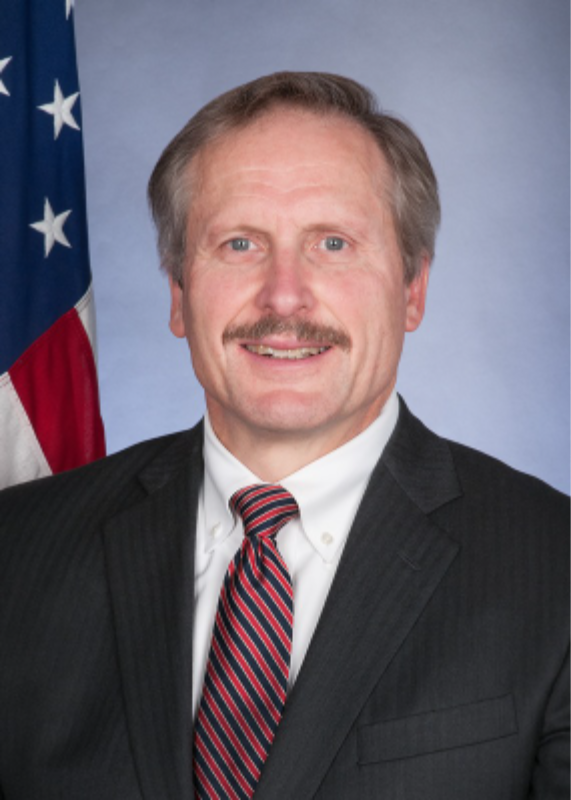
Ambassador (ret.) Robert Cekuta is a four-decade veteran of the U.S. Foreign Service whose postings included Berlin, Tokyo, Albania, and the Middle East as well as senior positions in State and Ambassador to Azerbaijan. He is a member of The Steady State.
Founded in 2016, The Steady State is a nonprofit 501(c)(4) organization of more than 400 former senior national security professionals. Our membership includes former officials from the CIA, FBI, Department of State, Department of Defense, and Department of Homeland Security. Drawing on deep expertise across national security disciplines, including intelligence, diplomacy, military affairs, and law, we advocate for constitutional democracy, the rule of law, and the preservation of America’s national security institutions.
Fighting corruption overseas has been a long-standing and integral piece of American diplomacy. Beyond advocating for important American values, fighting corruption globally advances stability, helps American companies and U.S. goods and services compete successfully around the world and increases American prosperity. My experience fighting corruption abroad leads me to worry even more about patterns that are emerging here at home.
The U.S. National Security Strategy (NSS) for the first Trump Administration, which President Trump signed in 2017, makes for interesting reading given today’s headlines. That first Trump Administration NSS notes:
“We are proud of our roots and honor the wisdom of the past … We are a nation of laws, because the rule of law is the shield that protects the individual from government corruption and abuse of power, allows families to live without fear, and permits markets to thrive.”
Later in that NSS in setting out the second pillar of the first Trump Administration’s national security agenda states that a USG priority is to:
“COUNTER FOREIGN CORRUPTION: Using our economic and diplomatic tools, the United States will continue to target corrupt foreign officials and work with countries to improve their ability to fight corruption so U.S. companies can compete fairly in transparent business climates.”
And further on, talking about the U.S. policies towards Africa, after noting positive developments in a many African countries, the National Security Strategy states:
“Despite this progress, many states face political turbulence and instability that spills into other regions. Corruption and weak governance threaten to undermine the political benefits that should emerge from new economic opportunities [emphasis added].”
This language on the importance of the rule of law and the imperative to fight corruption, which, again, President Trump signed off on in 2017, is important for Americans’ stability and prosperity at home — and stands in brutal contrast to the current Trump Administration’s actions. (It is perhaps worth noting that the the subject of fighting corruption is not mentioned at all in the Administration’s current NSS. )
Much of my lengthy diplomatic career focused on advancing Americans’ economic well-being, including by engaging foreign governments, companies, and interest groups to fight corruption and to institute and maintain sound laws, regulations, and legal procedures. This work as a part of the job in advanced industrialized countries such as Germany and Japan — some G-7 partners even allowed bribes to foreigners to be tax write-offs, thus almost institutionalizing bribery and corruption — as well as in emerging market countries.
Reasons to fight for rule of law and against corruption are straight-forward. If foreign companies can use bribes to win a contract or can pay off a judge to get a favorable decision or get out of obeying a law or regulation that still applies to the American firm, American commerce suffers. Bribes and other forms of corruption can cause our firms and products to lose out on millions, or even billions of dollars in sales. Bribes and corruption can tilt systems abroad against U.S. companies winning contracts and or cause foreign judges and other officials to rule against our companies in contractual and other trade disputes. Foreign corruption costs our companies and farmers and ranchers lost sales and hurts the American workers they employ.
But corruption also hurts the country where it takes place.
Bribes, fixed contracts, and buying off judges and other officials breed cynicism and distrust in a country’s rulers, systems, and institutions. Bribery and other shady or illicit practices can become the norm. Prices for projects and services get bloated and the final product shoddy, sub-standard, or even dangerous as a result of kick-backs, off-books payments, and other shady deals. Corruption becomes a cancer, a rot that can pervade a society and take years to weed out before a country’s public regains faith in its leadership and institutions.
Reports of payments for government favors are a continuing item in U.S. traditional and electronic media. There are the questions about Qatar’s gift of a Boeing 747 that had been the royal family’s — and the costs to the American taxpayer to refurbish it and make it secure for the President’s use. Trump’s White House ballroom was supposed to be built at no cost to the American taxpayer; it was going to be built through “private”, off-book contributions. There has been no competitive bidding process. The price tag for the project has risen to at least $500 million, may go higher, and the bill looks to be paid for in the end by the American taxpayer. Likewise, the no-bid contracts and costs for the Lincoln Memorial Reflecting Pool — currently around $16.4 million and significantly up from the $1.4 million the President originally said it would cost — will hit taxpayers’ pocketbooks.
At the same time the Wall Street Journal and other major news outlets are reporting that figures from President Trump’s latest financial disclosure report reveal that the and and his family made well over $1 billion last year, on crypto businesses.
That figure may be only part of the story.
An article in the ABA’s Human Rights Magazine this past March talks about how rampant pay-to-play corruption threatens American democracy. It notes the risk of Americans losing faith in their democracy due to many and frequent instances of money going to the right person, institution, or political cause will produce access, influence, contracts, and favorable rulings or regulations. The Department of Justice and the Securities and Exchange Commission, for example, dropped federal cases or investigations into companies willing to spend generously on the President’s priorities.
The ABA article and other reports note President Trump pardoned Changpeng Zhao, the founder and CEO of Binance, a firm that added tens of millions to the Trump family’s wealth. Zhao had pleaded guilty in November 2023 to his role in Binance’s willful failure to maintain a legally mandated anti-money laundering program. The article reports that while Zhao, aka CZ, was serving a four-month prison sentence in 2024, Binance began to help Trump family assets grow.
“in mid-2024, the Trump family began setting up World Liberty Financial (WLF), a crypto company in which they hold a substantial stake. Binance reportedly provided WLF with engineers whose work (at no charge) helped WLF set up its primary cryptocurrency, called USD1. Binance then elicited a $2 billion investment in USD1 from an Emirati state-owned investment firm, a move that ultimately netted billions of dollars for the Trump family. Binance has also thrown its considerable weight behind WLF, championing its crypto offerings both before and after Trump pardoned CZ in October 2025.”
The points here are straight-forward. For years American diplomats and other officials fought corruption overseas — at the direction of our elected leaders — because doing so leveled the playing field for U.S. firms and American products, fostered American prosperity, and helped advance our security. The First Trump Administration’s own National Security Strategy even spelled out this point.
 | A guest post by
|
The first Trump Administration had guardrails. No more.
A compelling and timely essay, Ambassador Chakuta. You remind us that the Constitution depends not only on the words written by the Framers, but on the courage of those entrusted to uphold them. When Congress relinquishes its oversight responsibilities, the balance that protects our republic begins to erode. Thank you for calling attention to a responsibility that belongs not to one party, but to every public servant who has sworn an oath to defend the Constitution.