
Going Dark: Professional Intelligence Collection Matters
The Steady State | by Martha Duncan

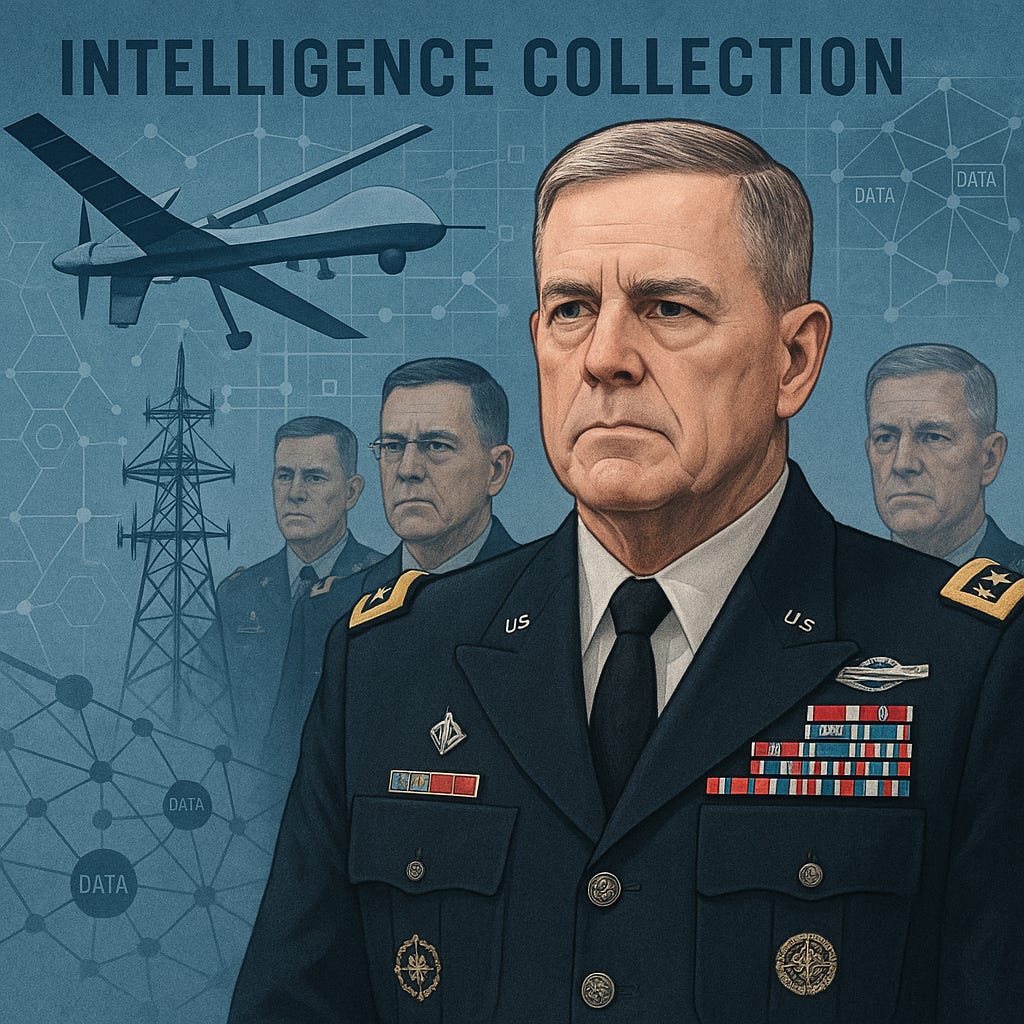
I spent over a decade in the Defense Intelligence Agency (DIA), trained in both operations and analysis, and later overseeing collection activity. One fact was undeniable: the system worked because it was led by seasoned professionals—mission-critical leaders who had earned their positions based on proven expertise. Today, that foundation is at risk.
In recent months, I’ve watched an unsettling shift. Many of those experienced leaders have been summarily replaced, often by less-qualified successors who lack the depth of background needed for this complex mission. The replacements are not just bureaucratic reshuffling or the often-necessary budgetary trimming. These are extensive and weaken the institutional expertise that underpins sound judgment, impairing decision-making at the highest levels, and, ultimately, endangering U.S. national security.
Intelligence collection is not a slogan or a talking point. It is a disciplined process, the intelligence cycle--that transforms raw streams of information into coherent, actionable insight for commanders and policymakers. Done right, it reduces uncertainty, informs proportionate responses, and prevents leaders from relying on hunches in moments of crisis.
At its core, professional collection means turning disparate data points into knowledge that helps the United States see clearly in a fog of deception. Joint doctrine has long recognized this: operational and tactical intelligence reduces uncertainty about adversaries and environments. That clarity only comes when trained professionals synchronize collection with analysis and operations.
And yet, the Office of the Director of National Intelligence (ODNI), now under Tulsi Gabbard, has announced sweeping workforce reductions--some estimates as high as 50% by year’s end. Gabbard justifies these cuts as eliminating “redundant” functions. But redundancy is a feature, not a flaw, in intelligence. Collection is a 24/7 endeavor, producing enormous volumes of data that require constant vetting, cross-checking, and re-analysis. Without overlap, accuracy collapses.
We’ve seen the consequences of lack of redundancy and coordination before. The bipartisan WMD Commission in 2005 concluded that flawed pre-war intelligence on Iraq stemmed from poor tradecraft and fragmented collection. I know firsthand from my role in the Defense HUMINT Management Office, where we fought to unify disparate human intelligence programs into one coherent enterprise to avoid this happening again. It took years to build what is now being dismantled.
Vladimir Putin and other adversaries are no doubt monitoring these cuts. They understand that every downgrade of our professional intelligence capacity widens their lens into our vulnerabilities. Meanwhile, today’s threats—from cyber intrusions to disinformation to rapid military modernization-- require sharper, not weaker intelligence capabilities.
Investment in professional collectors, modern sensors, interagency coordination, and proven leadership is not bureaucratic overhead. It is the price of national security. Professional organizations turn sensors into sense, data into decisions, and risk into manageable choices. Without them, U.S. policy becomes nothing more than guesswork.
The ODNI’s frameworks for integration and compliance are not only necessary guardrails—they are what legitimize intelligence in a democracy. They ensure that extraordinary capabilities serve both security and accountability. Abandoning them for short-term savings or political optics is not reform. It is a gamble with the nation’s safety.
The United States cannot afford to hollow out its intelligence community. We need the best-qualified leaders at the helm—those with proven records, not those parachuted in to check political boxes. In a world where adversaries move fast and deception is cheap, professional collection is the thin line between foresight and failure.
The question is simple: Do we want to see clearly, or do we want to stumble in the dark?
Martha Duncan is a retired DOD senior executive, with 36 years serving in the U.S. Army Reserves, Reserve attaché, analyst, operations officer, and 3 deployments to areas of conflict. She is a member of The Steady State.
Founded in 2016, The Steady State is a nonpartisan, nonprofit 501(c)(4) organization of more than 300 former senior national security professionals. Our membership includes former officials from the CIA, FBI, Department of State, Department of Defense and Department of Homeland Security. Drawing on deep expertise across national security disciplines including intelligence, diplomacy, military affairs and law, we advocate for constitutional democracy, the rule of law and the preservation of America’s national security institutions.