


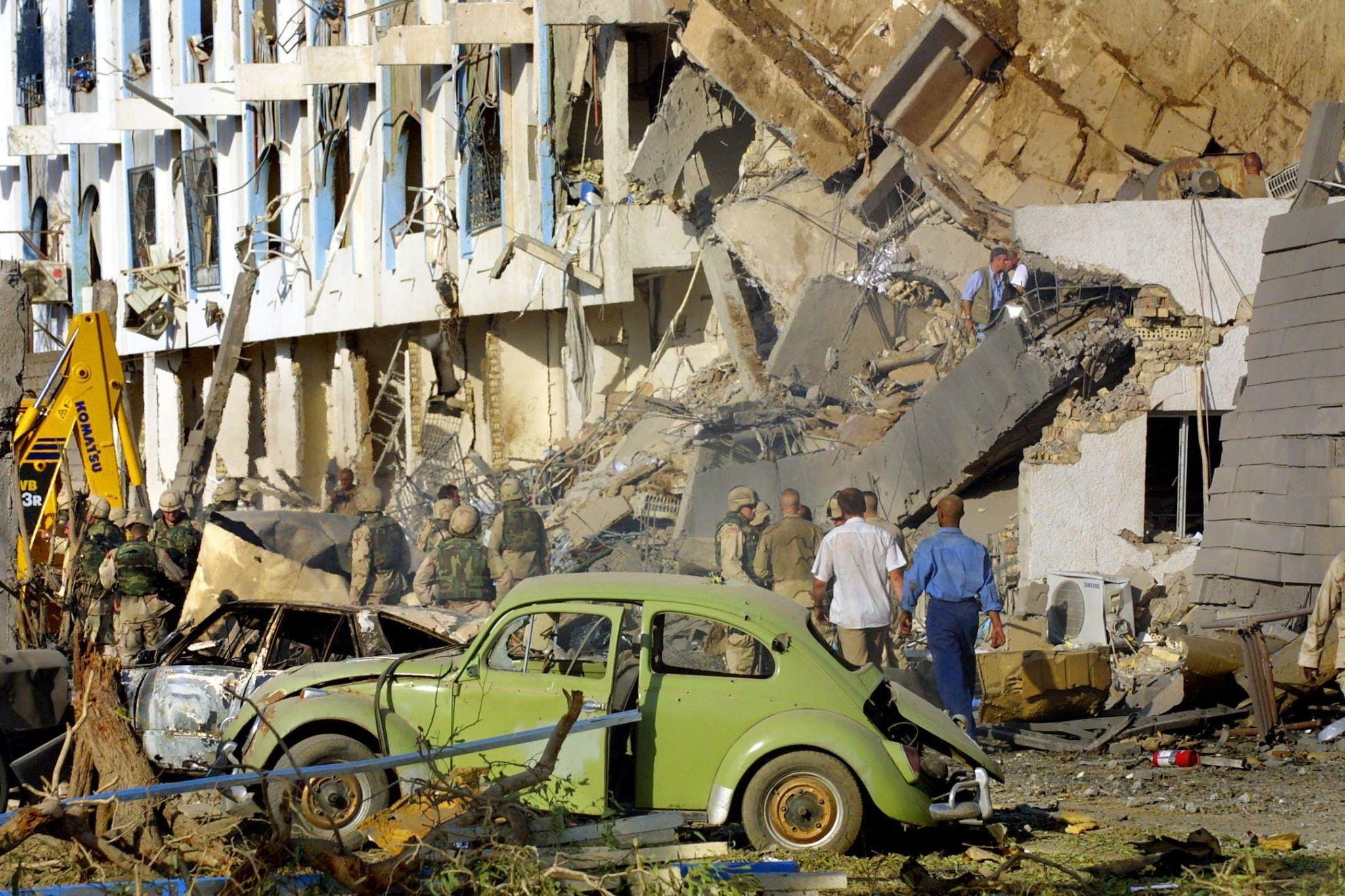
The United Nations headquarters in Baghdad Aug. 19, 2003, - by TOPSHOT
The American military’s extraordinary public trust rests on a simple promise: allegiance to the Constitution. But what happens when professional loyalty, institutional interests, and political pressure collide with what an officer knows to be true? I learned the cost of that question in Baghdad.
A few years back, I read the book entitled “The Cost of Loyalty” by West Point Professor Tim Bakken. The work spoke to me at multiple levels simultaneously. His narrative made for difficult reading. I found myself unconsciously squirming in my chair while examining his text in detail. I know and understand this discomfort from personal hard-won experience. It happens when reading an essential truth that I wish was false. Unfortunately, that truth is stalking me like a wolf on the fold. A truth is a stubborn thing.
What follows is a cautionary tale.
I was the Chief of Security for the United Nations in Baghdad in the summer of 2003 in the wake of the U.S. invasion. It was an incredibly difficult time for me and my staff. Security incidents were increasing almost daily. Attacks using improvised explosive devices (IED) were beginning to take a toll on U.S. forces. Our threat analysis concluded that the U.N. Mission would come under attack, too; we simply had no way of knowing how, when or where. I repeatedly reported our concerns to U.N. bosses in both Baghdad and New York, while recommending myriad risk mitigation policies and procedures to reduce the threat. Most of my formal and informal recommendations were ignored.
Although enormously frustrated, I remained loyal to our superiors. I stayed in my lane, even though our bosses seemed intent to drive us over a cliff. Essentially, I acted the role of good and loyal soldier, which was how I was trained by our nation’s military.
The cost was too high.
My level of frustration grew so great in early August that I contemplated resigning in protest. Regrettably, I allowed two colleagues to talk me out of it. They first made the point that the U.N. has no history of senior officers resigning in protest. Then, they made the case that my quitting would likely have zero impact on the U.N.’s chosen course in Iraq, and that we were marginally better off with me in charge of security rather than someone new and untested. But was my ultimate decision to remain based on ego or self-interest? Did I rationalize the situation so that I could remain employed in a position of both status and some small prestige?
On Aug. 19, 2003, a suicide bomber driving a large flat-bed truck carrying upwards of 2,000 pounds of explosives struck the U.N. headquarters in Baghdad: killing 22 and wounding more than 150. Included among the wounded was my wife, who was then working for the World Food Program. For all the years following, I have regretted not giving in to the impulse to resign in protest. As always, hindsight is 20/20.
The former national security adviser Lt. Gen. H.R. McMaster wrote a superb book many years prior to achieving national notoriety. His work is entitled “Dereliction of Duty.” McMaster made a powerful case that multiple flag officers within the Pentagon knew that the Vietnam War could not be won, and yet continued to send our country’s citizens into the Southeast Asian quagmire to die. Were they, like me, being good loyal soldiers? And if so, at what cost? Or, was self-interest at work? Once handed a flag with one star, would it not be a natural ambition to expand it to two or more?
I cannot remember even one flag officer during the Afghan conflict resigning in protest in order to tell the truth publicly-that victory was beyond our grasp-and in the attempt to save the lives of those American military members who would be subsequently killed or maimed by the Taliban.
We should be better than this.
The American military enjoys a degree of trust and confidence rivaled by no other institution in our nation. That trust must be guarded.
The US Armed Forces’ most senior officers bear the lion’s share of shouldering that burden, and so they should. The confidence those in uniform currently enjoy will erode over time if we fail to remember where our true loyalties should reside: to the American people and the U.S. Constitution to which we swear our allegiance. This is especially true in this age of runaway White House mendacity.
A hopefully salient quote from my own book follows: “Doing the right thing invariably means doing the hard thing. This is the true meaning of the word honor…”
Update and revision by the author of his article that first appeared in Military Times in 2020.
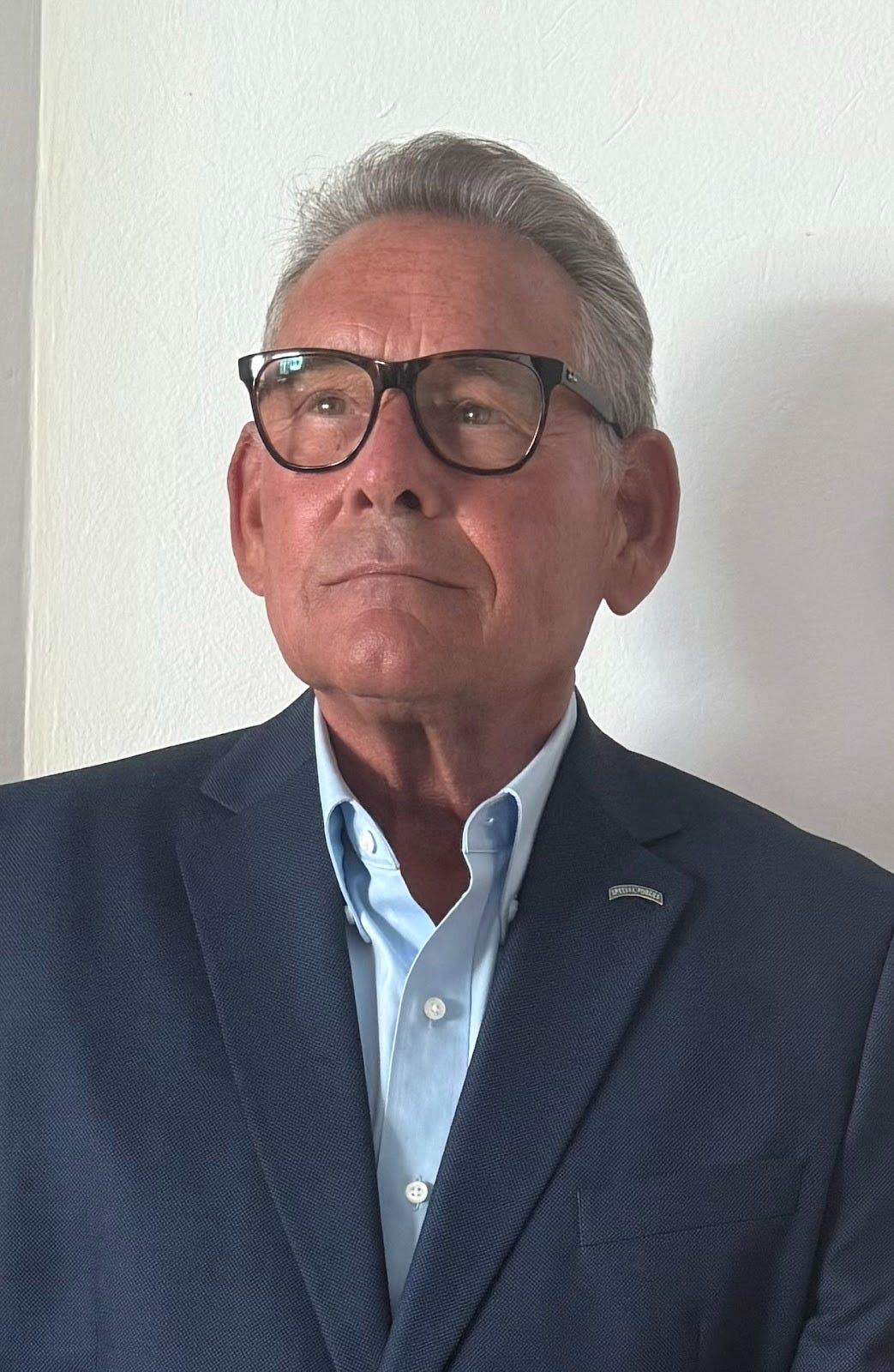
Robert Bruce Adolph , a qualified Military Strategist, is a retired senior US Army Special Forces soldier. He holds graduate degrees in both National Security Studies & International Affairs and was formally trained as a counterintelligence special agent. Robert also taught university level courses in American Government, US History, and World Politics. Following his retirement from the active military, he joined the UN, subsequently seeing service in Sierra Leone, Yemen, Iraq, Egypt, Israel/Palestine, Indonesia and more, culminating in the role of Chief of the Middle East and North Africa at UN Headquarters in New York. He is the author of “Surviving the United Nations,” now out in a second edition. He is a member of The Steady State.
Founded in 2016, The Steady State is a nonprofit 501(c)(4) organization of more than 400 former senior national security professionals. Our membership includes former officials from the CIA, FBI, Department of State, Department of Defense, and Department of Homeland Security. Drawing on deep expertise across national security disciplines, including intelligence, diplomacy, military affairs, and law, we advocate for constitutional democracy, the rule of law, and the preservation of America’s national security institutions.

Given the culture with the Trump administration and Congressional and military leadership, I find it virtually impossible to imagine officers and administration officials “resigning in protest.” We have a military committing blatant war crimes today, fighting a war that cannot be won, soldiering on following illegal, unethical, and frankly stupid orders, and who is standing up and calling out the people giving the orders? No one!
I've been writing more or less the same thing for about ten years now: many of my former classmates at the military academy I graduated from, along with many of the commissioned officers I had the pleasure to work alongside in my military career now seemingly couldn't care less about speaking up about Trump and MAGA and what these cretins are doing to our country under the guise of the Constitution, or what's left of it. Many of my fellow officers were like me back in the day - wanting to give our heart and soul to the military in allegiance and respect to our country, and to be good loyal soldiers and seamen in doing so. Despite what we found out about Vietnam's lies and Nixon's crimes, we were dedicated to the mission.
Now it seems as if most of my fellow compatriots don't really give a damn about what Trump is doing. Many have told me that they don't want to risk their pensions and other benefits. Unfortunately, I've lost a lot of friends in the process, and have lost respect for them as well. To me, my oath to the Constitution is a lifelong thing, not just while I was wearing the uniform.
Ironically, I never got close to being in position to resign my commission in the military, but have quit in protest in two high-level jobs with well-known high tech companies within the early years of the new millennium. One was due to illegalities I witnessed and reported, and the other was for unethical and immoral activities I discovered from very senior c-suiters. In both cases, I relinquished a high six figure salary and burgeoning stock options. I'll leave it at that; one must have his or her own standards of conduct and propriety no matter where one decides to ply his or her trade, and no matter what he or she might lose financially in the process.