
How to Harm Intelligence Agencies and Compromise National Security at the Same Time
The Steady State | by Charles A. Ray

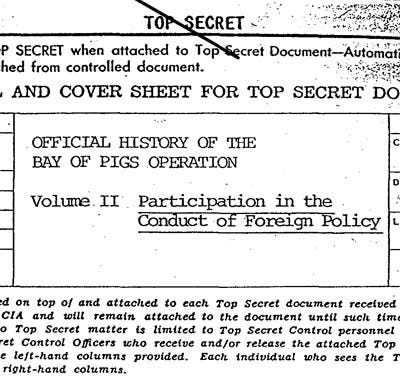
What part of ‘covert’ do you not understand?
Most dictionaries define ‘covert’ as ‘not openly acknowledged or displayed.’ A prime example would be covert operations against a dictatorship—even by another near-dictatorship. Once they are acknowledged or announced, by definition, they cease to be covert operations.
I was dumbstruck, therefore, to open up my morning newsfeed to see multiple media outlets announcing that President Trump had ‘secretly’ authorized the CIA to conduct covert action in Venezuela, and then a confirmation from Trump himself that he’d done so.
At the risk of sounding like a grammar purist, now that they’ve been acknowledged to the media by the commander in chief, they are no longer ‘covert’ operations; they are small-unit combat operations. In other words, intentionally or not, Trump just declared war on Venezuela. Not that targeting alleged drug-carrying boats off the coast of Venezuela, and killing 27 people, is not, in itself, an act of war, this announcement simply confirms what was already apparent to most of us. The administration is conducting combat operations without the approval of even its own tame Congress, with the unstated, but privately held goal of many in the administration, to drive Venezuelan President Maduro from power.
Aside from questions of an unauthorized war or violations of the Geneva Conventions and the Laws of War, the potential long-term impact of this operation on our intelligence agency’s ability to provide information on our adversaries or counter impending threats could be devastating. The CIA’s clumsy and unsuccessful attempts to assassinate Fidel and Raúl Castro in the 1960s cast a pall over US-Latin American relations for decades and were seen as a combination of American paternalism, racism, disdain, and contempt for Latin Americans. It’s unlikely that there is anyone still on active duty in our intelligence agency who was actively involved in the 1960s. However, the archives still hold the information, and there has to be someone capable of researching the history who could, at a minimum, raise a yellow flag.
I began my government career in July 1962, when I enlisted in the army, and served continually for over fifty years (20 years in uniform, and another 30 as a diplomat in the U.S. Foreign Service). My memory of details of things like the Bay of Pigs fiasco and the assassination of South Vietnamese President Ngo Dinh Diem and his brother on November 2, 1963, is still clear. So is the fallout from them.
Like their brothers in uniform, the operatives of the CIA and other intelligence agencies serve the nation and obey the orders of the elected leadership. When that leadership sends them to do things of questionable legality, or which are missions that, because of political manipulation and posturing, are destined to failure, their lives are put in danger and the ability of their agencies to function in pursuit of their principal mission is jeopardized.
In the end, our national security is compromised. One can only pray not fatally.
Charles A. Ray spent 20 years in the U.S. Army with two tours in Vietnam. He retired as a senior US diplomat, serving 30 years in the U.S. Foreign Service, with assignments as ambassador to the Kingdom of Cambodia and the Republic of Zimbabwe, and was the first American consul general in Ho Chi Minh City, Vietnam. He also served in senior positions with the Department of Defense and is a member of The Steady State.
Founded in 2016, The Steady State is a nonprofit 501(c)(4) organization of more than 340 former senior national security professionals. Our membership includes former officials from the CIA, FBI, Department of State, Department of Defense, and Department of Homeland Security. Drawing on deep expertise across national security disciplines, including intelligence, diplomacy, military affairs, and law, we advocate for constitutional democracy, the rule of law, and the preservation of America’s national security institutions.
There are literally millions of Americans who are old enough to have seen this movie before and should give it space in their own feeds. What’s new is the sheer lunacy of the president’s inappropriate public blathering, quite apart from lack of a sensible thought-through strategy. He piles evidence of an unskilled occupant on top the failures of his advisors who are too frightened to advise.
from “A Fish Called Wanda”: https://www.youtube.com/watch?v=MuCN0dvVWp8