
I've Seen Elections Stolen Before. I Never Expected to Worry About America.
A former U.S. diplomat who observed elections in Afghanistan, Haiti, Guatemala, and Colombia explains why the warning signs she’s spent a lifetime recognizing now feel uncomfortably familiar.


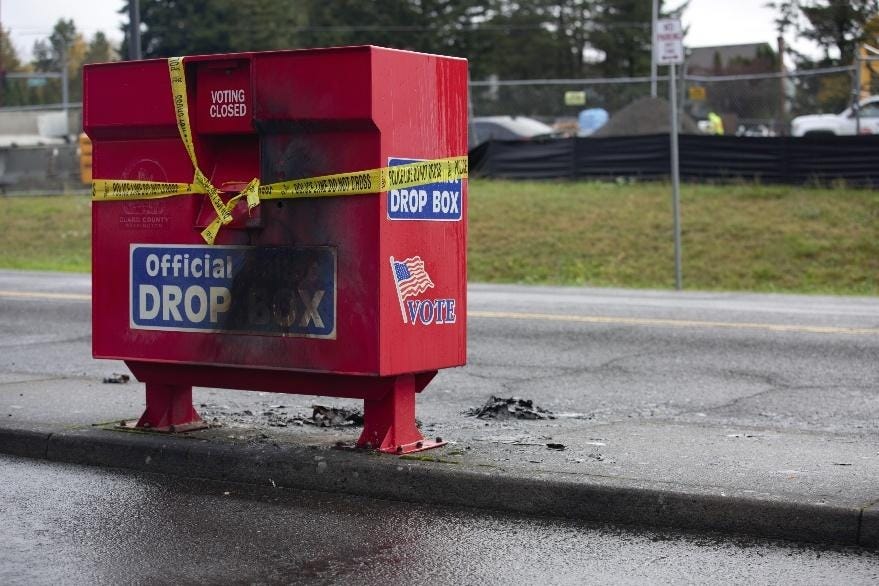
I’ve spent 30 years watching democracies struggle to hold free elections. The warning signs I once saw overseas are becoming visible in the United States—and protecting the vote now requires ordinary citizens to act before Election Day. .
Imagine a regime so paranoid about what it would face from opposition scrutiny that it begins to strip some voters of their right to cast a ballot; tells others they might be searched or harassed at the polls, if they don’t produce documents they have never had to show before; changes the location or hours of polling sites without sufficient notice for voters to make their plans; or claims that an unspecified emergency has required a suspension of election day until further notice.
As a U.S. diplomat, I worked and lived in countries where these were common issues. I observed balloting in Colombia in 1990 during its most violent election, when three presidential candidates were assassinated. In 2009 I managed the U.S. Embassy’s observation effort in Afghanistan of elections which were allegedly so corrupt that in some locations over 100 percent of the voters supposedly cast ballots. And I was privileged to be part of official observer missions to elections in Haiti and Guatemala, watching voters stand in line for as long as six hours, trying to change dysfunctional governments without resorting to violence.
Since leaving the State Department, I have served as an occasional poll worker in New York City, where I live, helping Spanish-speakers navigate the balloting process. New York has the longest election hours of any state: We show up at five in the morning and work until the results are reconciled, around 10 pm. It is a very long day, with minimal pay, and I do it happily: addicted to the feeling I get when I help someone and that corny applause we all give to a first-time voter. It is well run; observers visit with frequency to check how we are processing people and results, and we remind one another of the rules. Volunteering to work the polls, or to be an election observer, are two tangible ways to make a difference, and I strongly encourage everyone to give it a try.
The Threats
The current threats to the vote in the United States have been well documented. In the November midterms, a win by Democrats in the House and Senate would shift committee chairmanships, opening up their ability to call for investigations of the Executive, and possibly allow the passage of legislation despite vetoes. To avoid this, the President has encouraged partisan redistricting, and introduced laws (the “SAVE” Act) and Executive Orders to control voter rolls, mail-in balloting, and the conduct of election officials. Advocacy groups and state Attorneys General have pushed back, and some of these efforts have already been defeated in the courts – including a recent Federal Court ruling that “The Constitution does not grant the President any specific powers over elections.”
Our system, thankfully, is “inefficient,” characterized by built-in redundancies of counting, staffed by county officials and local volunteers, with the inability of any single official or group to control it. A national election authority is often in danger of high-level corruption that can change the entire outcome, as I saw in Afghanistan. That is what the president is trying to introduce here. A stolen election routinely led to violence in the histories of many of the countries I observed.
What can we do?
Elections are not only stolen on the day of voting; it takes preparation to derail them. Let’s start now to protect the vote. Non-profit organizations are on the job tracking, researching, and helping with key legal challenges and practical issues. Here are a few important players (not an exhaustive list!)
Indivisible’s Election Defense Corps: grassroots network of volunteers located in Alaska, Georgia, Iowa, Michigan, North Carolina, Ohio, and Texas dedicated to protecting the right to vote. If you live in one of those states, they really need you! You can join it here.
Please consider giving money, time, and public support to these groups, or others, to carry out this important work.
And please ask your loved ones to get out the vote! Compared to showy acts of civil resistance, voting seems banal; many Americans don’t even bother. But that is a horrible mistake. When you have seen elections stolen overseas, you want never to allow it in your own country. Let’s treat our right to vote as the incredible, peaceful weapon that it is, a way to curb the worst instincts of those who abuse power and hope never to pay the price.
Let’s protect the vote together.
A retired U.S. Department of State senior career diplomat with 30 years’ experience in security, human rights, and counter-narcotics policy, Annie Pforzheimer was Deputy Chief of Mission at the US Embassy in Kabul and is currently an adjunct professor of international relations. She is a member of The Steady State.
Founded in 2016, The Steady State is a nonprofit 501(c)(4) organization of more than 400 former senior national security professionals. Our membership includes former officials from the CIA, FBI, Department of State, Department of Defense, and Department of Homeland Security. Drawing on deep expertise across national security disciplines, including intelligence, diplomacy, military affairs, and law, we advocate for constitutional democracy, the rule of law, and the preservation of America’s national security institutions.
 | A guest post by
|
Great post. Hopefully people will continue to work to protect our votes and judges keep shooting down what they are trying to do. Thank you Ann
An excellent perspective and one that events make an even more profound concern by the day. Some complementary thoughts on history that only reinforce a view of the dangers ahead. Keep up the good work. https://kentmharrington.substack.com/p/the-last-election-then-and-now