
The Flag Is Not a Prop
A retired Army officer reflects on what America’s 250th birthday should remind us about patriotism, constitutional duty, and the oath that outlasts every president.


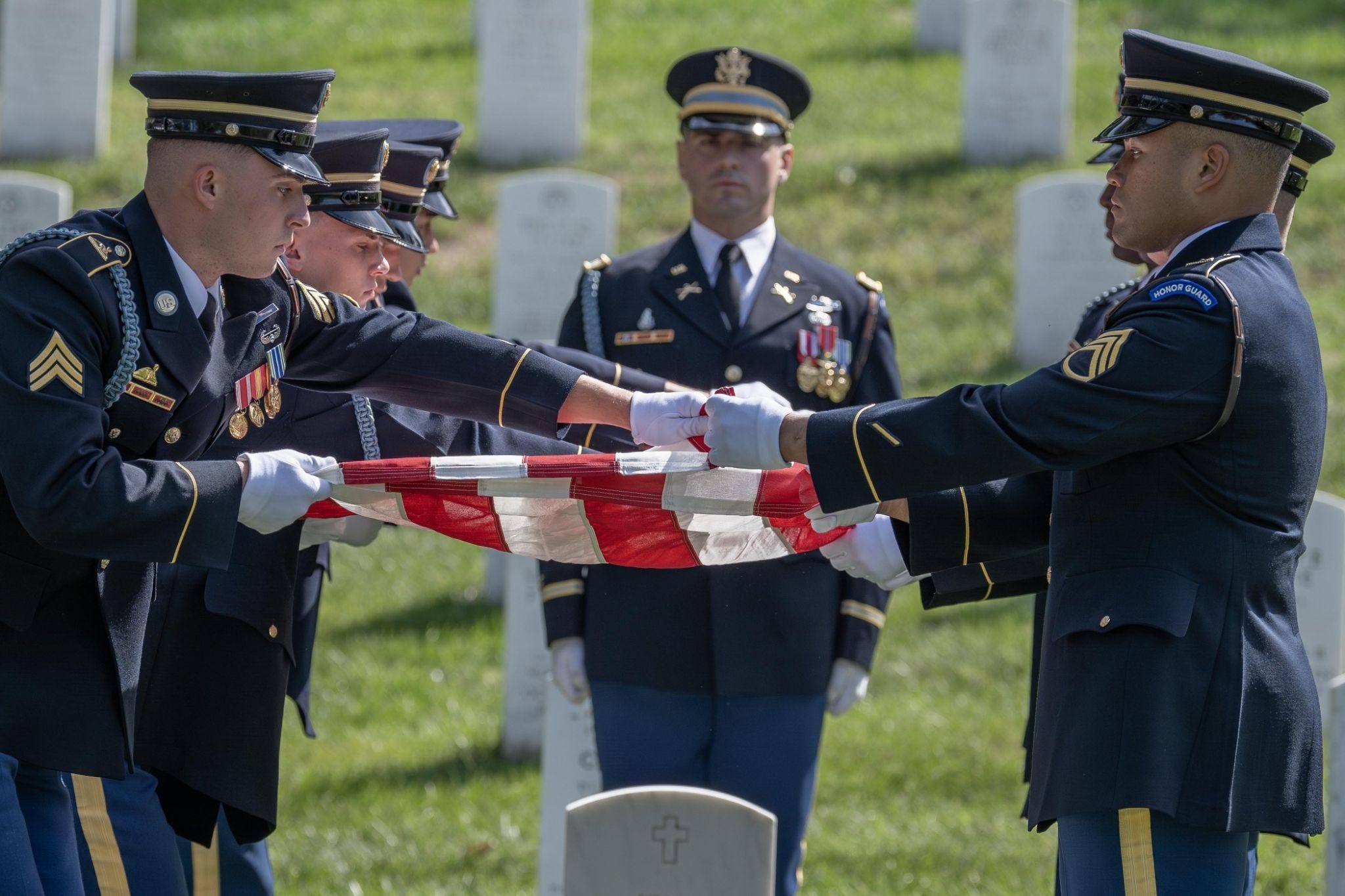
A burial of a fallen soldier in the quiet of Arlington Cemetery
As America celebrates 250 years of independence, the greatest act of patriotism isn’t waving the flag—it’s defending the Constitution, honoring those who sacrificed for it, and remembering that loyalty belongs to the republic, not to any political leader.
Our country celebrates 250 years of independence today.
There will be fireworks, parades, concerts, speeches, and countless photographs of politicians wrapped in red, white, and blue. Many will wave the American flag. Some will hug it. Others will use it as the backdrop for campaign slogans and political branding.
But as I watch these celebrations unfold, I find myself asking a simple question. Do we still remember what that flag represents? For those of us who have worn our nation’s uniform, the flag has never been a prop. It is not an accessory for a political rally. It is not a campaign backdrop. It is not something to embrace for a dramatic photograph as we have seen the president do many times. It is a promise. For nearly four decades, I served this nation—23 years in the United States Army Reserve and 38 years as a Department of Defense civilian. My service carried me to Panama, Bosnia, Afghanistan, and countless places where democracy was fragile and freedom was never guaranteed.
I have watched our flag draped over caskets. I have saluted it during memorial ceremonies where families sacrificed far more than anyone watching from the sidelines could ever understand. I have watched young soldiers raise it after dangerous missions, not because they sought applause, but because they believed in something larger than themselves. That is what the American flag has always meant to me. Not power. Not politics. Not personality. Purpose.
As America marks a quarter of a millennium of independence, it is worth remembering that our founders did not pledge their lives to a flag, alone. They pledged themselves to an idea. The Declaration of Independence proclaimed that all people are created equal and possess unalienable rights. The Constitution was established as the supreme law of the land, it did not establish a “supreme leader.” Generation after generation has defended those ideals—not because America has always lived up to them, but because the promise was worth working towards and protecting.
The flag symbolizes that promise. It represents liberty over tyranny. Law over personal power. Duty over self-interest. Service over spectacle. Every soldier who raises a hand and swears an oath understands something fundamental that many civilians never have to contemplate.
The oath is not to a president. It is not a to a political party. It is not an ideology. It is to support and defend the Constitution of the United States against all enemies, foreign and domestic. That distinction matters. It has always mattered. It is the Constitution that makes the flag worthy of our reverence.
When patriotism becomes confused with loyalty to a single political figure, we lose sight of what generations fought to preserve. Democracies have always depended upon citizens who understand that devotion to country also requires questioning those who temporarily hold power. Our institutions endure precisely because no individual is greater than the republic itself.
Throughout my career, I served under presidents from both political parties. Some I agreed with. Some I did not. That never changed my mission. The Constitution remained constant even when politics changed. That continuity is one of America’s greatest strengths. Today, however, I worry that patriotism itself has become distorted. Too often, it is measured by slogans instead of sacrifice. By appearances instead of actions. By displays instead of duty.
A flag embraced for a photograph can never equal the flag folded into a grieving mother’s hands. A campaign rally can never equal the silence of Arlington. A military parade can never substitute for caring for veterans, protecting the constitutional rights they defended, preserving the nonpartisan character of our armed forces, and strengthening the democratic institutions they swore to protect. As we celebrate 250 years of independence, perhaps the greatest tribute we can offer is not another display of patriotic symbolism. Perhaps it is recommitting ourselves to the principles beneath the fabric. Our republic has survived wars, depression, terrorism, political division, and countless moments when its future appeared uncertain. It survived because ordinary Americans understood that citizenship carries responsibilities as well as rights.
The flag asks something of us. It asks us to protect liberty even when it is difficult. To defend the rule of law even when it is inconvenient. To respect truth even when it challenges our own beliefs. To preserve democratic institutions even when elections do not produce the outcomes we wanted. To place country above self. That is patriotism. As we commemorate America’s 250th birthday, I hope we spend less time asking who embraces the flag most dramatically and more time asking who lives the values for which it stands. Because long after the speeches are forgotten, the fireworks fade, and today’s political leaders pass into history, the American flag and that for which it stands, must remain. Its meaning has never depended upon the people who hold it. Its meaning depends upon whether we remain worthy of it.
America’s first 250 years were built by citizens willing to sacrifice for an ideal. The question before us now is whether we will be the generation that preserves that ideal or merely performs it. The flag deserves more than our applause. It deserves our fidelity to the Constitution, our commitment to one another, and our determination to leave the next generation an America that is not merely older, but stronger, freer, and more faithful to the principles upon which it was founded. That is the patriotism worthy of 250 years. That is the America our flag has always represented.
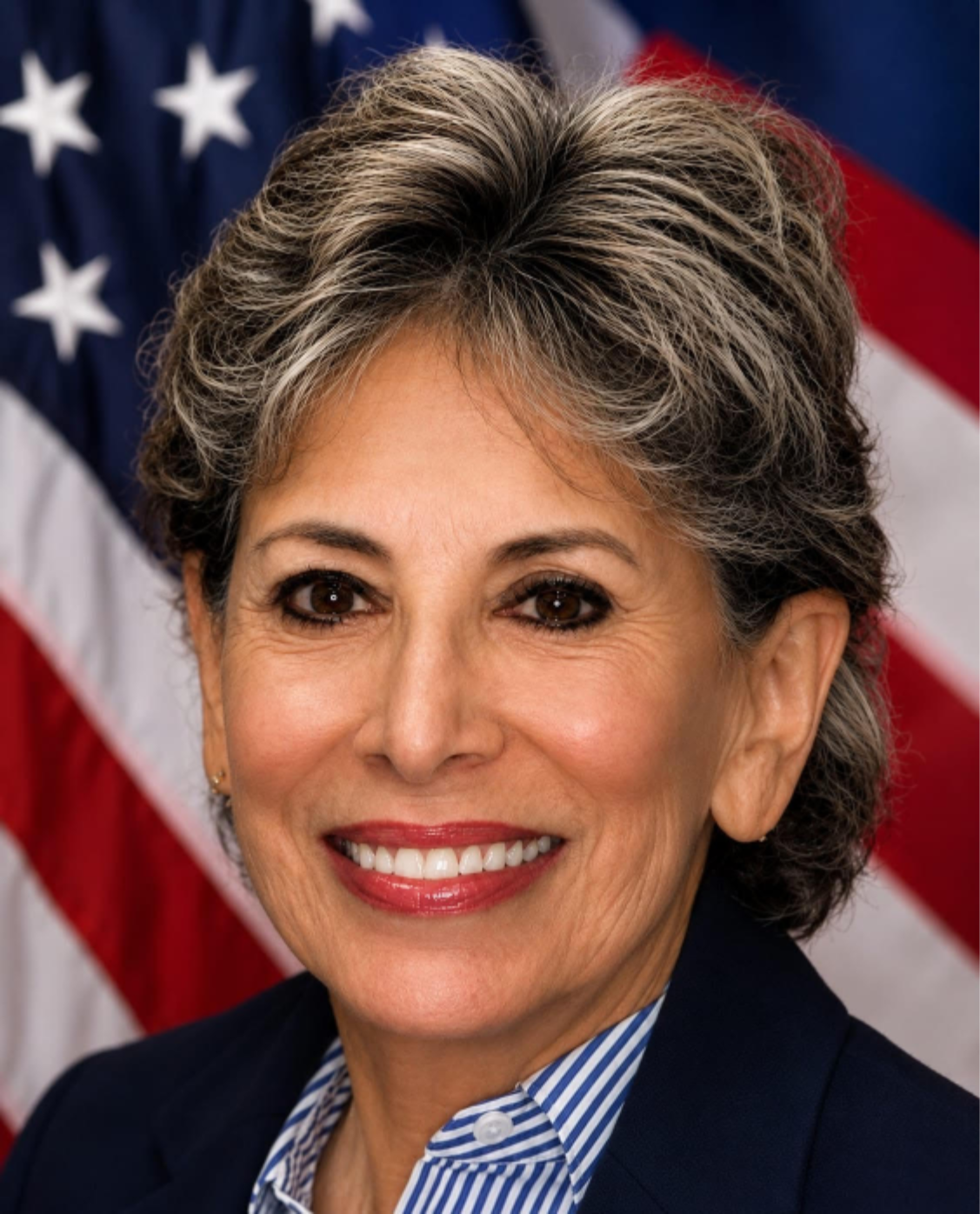
Martha Duncan is a retired U.S. Department of Defense senior executive with 37 years of service, including 23 years as an officer in the U.S. Army Reserves, where she also had three operational deployments to Panama, Bosnia and Afghanistan. At the Defense Intelligence Agency (DIA), she worked as a Latin American analyst for 11 years. A specialist in human intelligence (HUMINT), she is recognized for her leadership in intelligence operations, coalition-building, and enterprise-level policy development across DIA, the U.S. Army, and the broader Intelligence Community.
Founded in 2016, The Steady State is a nonprofit 501(c)(4) organization of more than 420 former senior national security professionals. Our membership includes former officials from the CIA, FBI, Department of State, Department of Defense and Department of Homeland Security. Drawing on deep expertise across national security disciplines including intelligence, diplomacy, military affairs and law, we advocate for constitutional democracy, the rule of law and the preservation of America’s national security institutions.
 | A guest post by
|
To those of us who think like you, the flag is not a prop. To Trumpians, it is. The question for today is how do we regain our past, because an alternate reality is what we’re living in now.
Well said. First time I saw him hug the flag, I nearly threw up.