
The Influence Machine
Honduras: A case study in the growing convergence of presidential power, Silicon Valley capital, and political influence.


The pardon of Honduras’ former president is more than an isolated act of clemency. It reveals how twenty-first-century influence increasingly flows through interconnected networks of investors, political operatives, think tanks, and presidential authority—raising difficult questions about whose interests American foreign policy ultimately serves.
For many Americans, Honduras rarely occupies a prominent place in U.S. foreign policy. It lacks the geopolitical weight of China or Russia, and it seldom commands sustained attention outside immigration debates or natural disasters. Yet recent events suggest Honduras has become something far more significant: a case study in how political influence, private capital, and presidential power increasingly intersect.
The pardon of former Honduran President Juan Orlando Hernández brought this dynamic into sharp focus. Hernández was convicted in U.S. federal court on drug trafficking charges after prosecutors alleged he helped facilitate the shipment of hundreds of tons of cocaine into the United States. His conviction represented years of investigation by federal prosecutors and law enforcement. Trump nevertheless granted Hernández clemency following an intensive lobbying effort by political allies, including Roger Stone and other supporters who argued the prosecution was politically motivated.
The pardon raises an obvious question: why would a Central American political figure attract such extraordinary attention from influential voices within Trump’s political orbit? One answer may lie beyond traditional diplomacy.
Prospera
During Hernández’s presidency, Honduras became home to one of the world’s most ambitious libertarian investment projects: Próspera, a privately governed development zone on the island of Roatán established under Honduras’ ZEDE legal framework.
The project promised an alternative model of governance featuring reduced regulation, low taxation, private arbitration, and broad autonomy intended to attract entrepreneurs, technology firms, cryptocurrency ventures, and venture capital. Hernández was one of the principal political champions of the ZEDE framework that made Próspera possible.
Silicon Valley
Próspera also attracted prominent Silicon Valley investors and libertarian entrepreneurs. Reports have linked supporters and investors associated with Peter Thiel, Marc Andreessen, and Pronomos Capital to the project, although there is no public evidence that Thiel personally participated in lobbying for Hernández’s pardon, and his representatives have denied involvement.
Following the election of President Xiomara Castro, Honduras repealed the legal framework authorizing the ZEDEs, arguing they violated national sovereignty. Próspera subsequently initiated international arbitration seeking billions of dollars in damages from Honduras, turning what began as an economic experiment into an international political and legal dispute.
Viewed independently, these developments might appear unrelated. Together, however, they reveal an increasingly interconnected network of political actors, investors, lobbyists, and ideological organizations whose interests converge around the same foreign policy decisions.
The Claremont Institute
The Claremont Institute has championed many of the nationalist and executive-power ideas embraced within Trump’s political movement. Roger Stone publicly argued that preserving Próspera required Hernández’s release. Technology investors connected to the project viewed the ZEDE model as a laboratory for private governance and regulatory experimentation. Trump allies advocated for Hernández while simultaneously criticizing Honduras’ current government for reversing policies favorable to foreign investors.
Whether these relationships directly influenced presidential decision-making cannot be established from publicly available evidence. Yet their convergence raises important questions about how influence operates in modern American politics.
The broader issue extends well beyond Honduras.
Throughout Trump’s political career, personal loyalty, business relationships, political alliances, and official government decisions have frequently overlapped. Similar questions have arisen regarding Russia, cryptocurrency ventures, foreign sovereign investment, media ownership, and technology entrepreneurs whose financial interests intersect with public policy. This does not necessarily establish corruption. But democratic governance depends not only upon legality; it depends upon public confidence that government decisions are made primarily in pursuit of the national interest rather than the interests of politically connected networks.
Honduras illustrates this tension in unusually clear form. A country of fewer than eleven million people suddenly became the focus of presidential clemency, ideological advocacy, international arbitration, venture capital investment, and geopolitical competition. The common denominator was not simply anti-socialism or immigration policy. It was a convergence of politics, private investment, and personal influence.
That convergence deserves scrutiny—not because Honduras alone determines American foreign policy, but because it illustrates how twenty-first-century power increasingly operates. Influence is no longer exercised solely through diplomats and treaties. It now flows through investment funds, technology networks, think tanks, political consultants, presidential pardons, and personal relationships.
The question for democratic governance is therefore larger than Honduras itself: when private financial interests, ideological movements, and presidential authority become increasingly intertwined, how can citizens distinguish between foreign policy made in the public interest and foreign policy shaped by private networks of influence?
And equally important, what will citizens do about it?
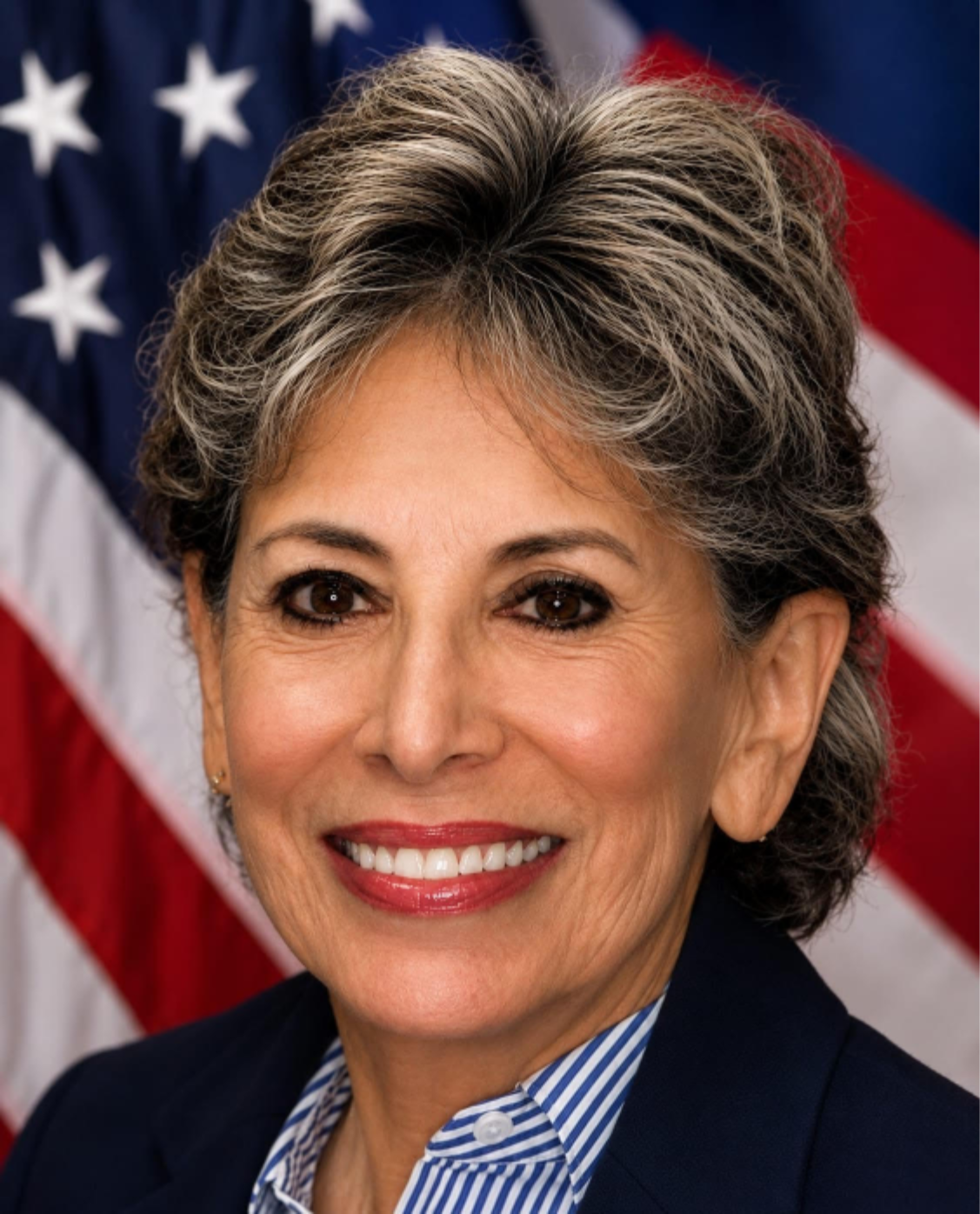
Martha Duncan is a retired U.S. Department of Defense senior executive with 37 years of service, including 23 years as an officer in the U.S. Army Reserves, where she also had three operational deployments to Panama, Bosnia and Afghanistan. At Defense Intelligence Agency (DIA), she worked as a Latin American analyst for 11 years. A specialist is human intelligence (HUMINT), she is recognized for her leadership in intelligence operations, coalition-building, and enterprise-level policy development across DIA, the U.S. Army, and the broader Intelligence Community.
Founded in 2016, The Steady State is a nonprofit 501(c)(4) organization of more than 415 former senior national security professionals. Our membership includes former officials from the CIA, FBI, Department of State, Department of Defense and Department of Homeland Security. Drawing on deep expertise across national security disciplines including intelligence, diplomacy, military affairs and law, we advocate for constitutional democracy, the rule of law and the preservation of America’s national security institutions.
 |
|
Martha's analysis is well-grounded with deep experience and insights into Latin American politics.One might add:: Four days after President Trump's second inagural, on Jan. 24, 2005, a Clarement Institute publication asserted that the real source of corruption in Honduras was "the Biden Administration," which had worked with leftist regimes to unleash a "wave of corruption" throughout the region. To remedy this, the Clarement operatives called for Juan Orlando Hernandez to be pardoned --- advice which Trump took. As the Wall Street Journal reported, Hernandez had been convicted in a US court for "conspiring with cartels to ship 400 tons of cocaine to the U.S." Moreover, Politico has reported on Claremont's deep connections with Trump/MAGA figures: Tom Cotton, who chairs the Senate Intelligence Committee. CIA Deputy Director Michael Ellis, and other key aides at State, the Pentagon, and Homeland Security. None of these luminaries have expressed any discomfort over Donald Trump's putting a convicted drug dealer back on the streets.
Martha alerts us to yet another threat of a rapidly changing world power structure, including the rise of the oligarch. U.S. [and Trump family] recent adventurist interest in Venezuela, Cuba, Honduras, Panama, [and Albania] indeed appears motivated by something other than our national interest. The idea of creating semi-autonomous "development zones" free of pesky sovereign nation oversight and control would be very appealing to venture capitalists, billionaire tech bros and multi-national criminal elements alike. Think of it...strange and dangerous powerful "aliens" mixing, like in the bar scene from Star Wars...complete with unregulated offshore banking, antidemocratic influence seeking ideologues and outright criminal organizations operating with impunity. This is a story that deserves much more media attention.