
Using Tariffs As A National Security Tool: A Cure-All, Or A Poison Pill?
The Steady State | By Charles A. Ray

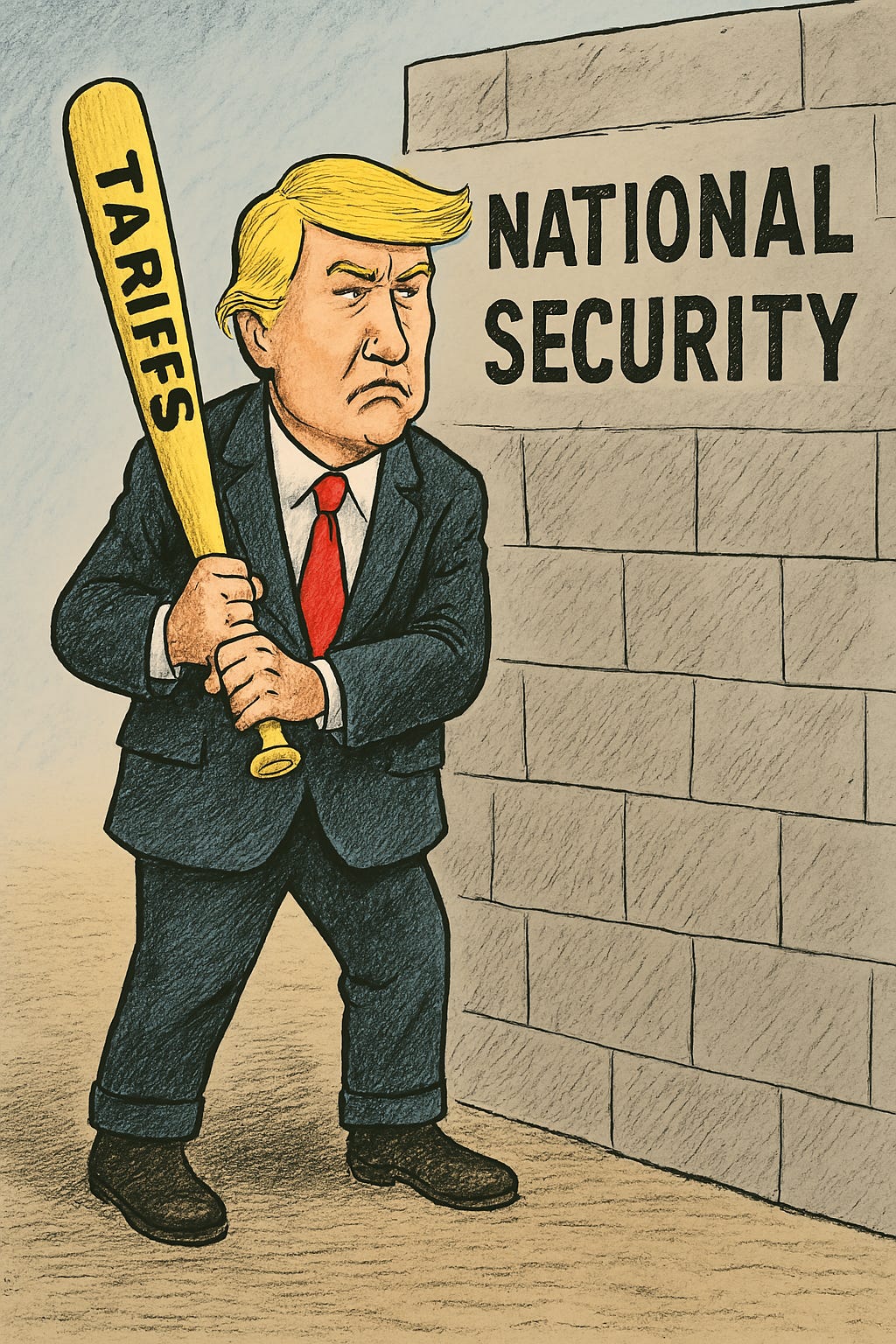
A recent Washington Post article describes President Donald Trump’s ‘freewheeling use of tariffs as a tool of American power,’ or a kind of Swiss Army knife of American diplomacy, as he uses the threat of punitive tariffs, not just to redress what he sometimes describes as unfair trade practices of other countries or to reduce the chronic U.S. trade deficit, but also to compel foreign governments to do non-trade things that support U.S. interests.
This approach is a sharp departure from the postwar playbook of trade diplomacy. Tariffs have traditionally been deployed as leverage in economic disputes, tools to encourage the opening of foreign markets, or the reduction of trade imbalances. The Trump administration has transformed them into a blunt instrument to pressure foreign nations not just on trade, but on issues ranging from defense spending to immigration and technological cooperation.
The shift to using tariffs as a cudgel for national security aims has profound implications. On the one hand, it underscores the flexibility and power of the American economy: the prospect of losing access to the American market can compel governments, allied and adversarial alike, to reconsider their policies. For example, despite the secretary of defense’s assurances to Japan that the U.S.-Japan alliance was strong, Trump made it clear that bilateral security issues and trade discussions were linked. As a result, Japan undertook a significant expansion of its defense budget and braced for American demands to increase its contribution to U.S. defense talks. In addition, Japan committed to increased investments in the United States.
But the risks in this ‘freewheeling’ tactic are also significant. In the first place, it blurs the line between economic and security interests, potentially undermining the credibility of both. Allies, who have long relied on stable, rule-based negotiation, might feel betrayed by what they perceive as economic bullying. This erodes mutual trust and complicates cooperation on core security issues. In the aforementioned case of Japan, for instance, it has pushed Japan to reach out to other trading partners, such as China and South Korea, and even to strengthen its security cooperation with NATO. When a government feels it is being coerced, this can cause resentment that can sour intelligence sharing and military collaboration.
The use of trade relations for economic coercion against other nations is also a breach of international and bilateral trade agreements. This sends the message that the U.S. can no longer be relied on as a trusted partner, which was highlighted in February 2025, when the Trump administration threatened 25 percent tariffs on Canada and Mexico, and imposed a 10 percent tariff on China, citing a national emergency due to illegal migration and drugs. The ill will generated by that move still exists, and complicates relations between the U.S. and its two closest neighbors and largest trading partners.
The use of tariffs as a multi-purpose tool invites retaliation and causes uncertainty in global markets. Others might respond with tariffs or their own, hitting American farmers or manufacturers in the pocketbook, and stoking domestic political discontent. The unpredictability of these tariff threats, often announced by social media posts, with little warning, rattles markets and discourages investment. Companies that rely on global supply chains are left scrambling, their competitive edge dulled by sudden cost increases and shifting rules.
There is also a long-term strategic risk. The United States, the architect of the modern international trade system, built its economic strength in part on the predictability and fairness of the system. By weaponizing tariffs for objectives unrelated to trade, we are seen as undermining the very rules we once championed, inviting others, such as China, to do the same. This could increase a global trend toward economic nationalism, fragmenting markets and reducing collective prosperity.
Using tariffs as a Swiss Army knife for diplomacy is a high-risk, high-reward strategy. While it might yield short-term victories on national security or other fronts, it risks corroding alliances, destabilizing markets, and undermining the norms that have enabled America’s economic leadership since the end of World War II. The ultimate calculus might depend not on what was won in each confrontation, but on what is lost over time in the erosion of trust and the predictability that long underpinned the global trading system.
Picture the following scene. Donald Trump, against the backdrop of an ornate, gilded government office, with papers, some of them labeled ‘Trade Deals,’ scattered across a large desk. Trump stands triumphantly and confidently, wielding an oversized bat, emblazoned with the words ‘Tariffs’ in bold letters. Facing him, a meek-looking man stands clutching a stack of papers. The man looks wary and defensive. Behind him stand several other people, looking angry and scribbling notes. Some are holding signs, reading ‘Retaliation,’ ‘Diplomacy, ’ and ‘Countermeasures.’ A fanciful picture, but one that is not far from reality.
Charles A. Ray spent 20 years in the U.S. Army with two tours in Vietnam. He retired as a senior US diplomat, serving 30 years in the U.S. Foreign Service, with assignments as ambassador to the Kingdom of Cambodia and the Republic of Zimbabwe, and was the first American consul general in Ho Chi Minh City, Vietnam. He also served in senior positions with the Department of Defense and is a member of The Steady State.
Founded in 2016, The Steady State is a nonpartisan, nonprofit 501(c)(4) organization of more than 290 former senior national security professionals. Our membership includes former officials from the CIA, FBI, Department of State, Department of Defense, and Department of Homeland Security. Drawing on deep expertise across national security disciplines, including intelligence, diplomacy, military affairs, and law, we advocate for constitutional democracy, the rule of law, and the preservation of America’s national security institutions.
Well-said! One might add this: After the disastrous tit-for-tat tariff wars of the 1930s that deepened the global depression, after WWII the United States played the leading role to establish the GATT —- General Agreement on Tariffs and Trade. The driving economic principle of the GATT and it’s successor, the World Trade Organization, was that tariffs and barriers to trade should be lowered, not raised. That economic insight has fostered unprecedented global prosperity throughout our lives —- until now.
Extremely erudite analysis. Trump tariffs will kill our economy for years to come. That is if mass deportations and the debt created by the BBB don’t impact first.