
What We Can Do
The Steady State |The Steady State

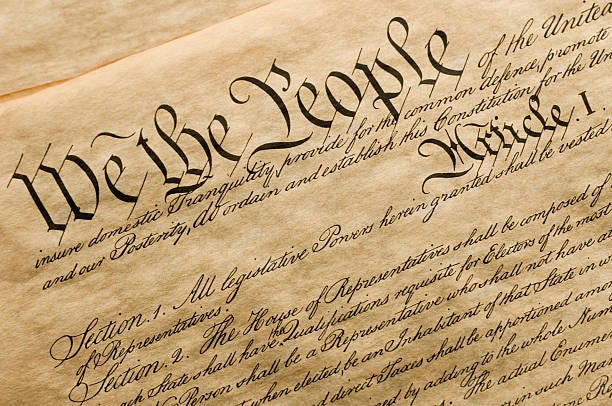
2025 is certainly not the first time the United States has been hit, with a potentially nation-ending social upheaval. The civil rights battles certainly revolved around a continuing effort to restrict democracy for and dehumanize an entire group of our people. The Vietnam War resulted in almost 60,000 dead, many, many thousands of wounded American citizens. The pace and substance the social changes that began in the 1960s and continued in the early 21st century certainly must have seemed threatening, if not devastating, to numerous of our citizens.
But today’s upheaval seems to be and feels so much more dangerous; just a sliver over half of our voters chose to elect someone who promised a dictatorship, who told many of us that he hates us, that he knows we don’t belong, that he will take away our rights and threaten our persons. He told us that White, Christian, Straight men would benefit from his reign, and he knew that his political party would do nothing to stop him or slow him down. He told us he wanted to be a dictator. He told us which leaders he idolized. And, while he now seems to be desperate to hide what apparently, in the the Epstein files, is likely the most blatant example of his lack of moral compass, he had already repeatedly demonstrated that he lacked one. Still, almost half of us voted to give him the power to do all that he wanted. And he is, aggressively and only nominally legally, doing all the things he told us he would do, destroying our democracy as he moves.
It leaves so many people asking, “what can we do?”
We can resist. We can band together and show him and the world what we think of his lack of decency. We can work to ensure that our neighbors, regardless of heritage, will not be kidnapped. We can elect governors who will try to stop his troops from stealing our friends and families. We can march. We can donate to groups that will work to stop him. What we cannot do is give up.
There are numerous concrete actions that each of us can take now, and repeat again and again, to slow the effort and to goose the system to try to stop the destruction of our democracy. The Steady State has compiled a short list of things to consider. We encourage you to choose from among them, do them repeatedly, and to give the list give the list to your neighbors, friends, and families so they can join you and us. Here goes.
What We Can Do:
1) Call our elected representatives–each of the two Senators and your one Representative, regardless of party affiliation, and register your disapproval or approval. Their offices keep a record and notes of the number and nature of calls and deal with requests from each caller. Remember, you are speaking with a representative of the politician, often a young person without a lot of experience and with little or no input into whatever issue you are calling about. Please remain patient and polite so your comments are counted, and not dismissed as the rantings of a crank. Go to The Steady State Website Resource Page “cheatsheets” for “Contact Your Congressman” further guidance.
2) Donate to Political Campaigns. While we refrain from recommending a given party or candidate, we recommend against any party supporting or participating in dictatorial, autocratic policies and activities, and suggest supporting parties or candidates who authentically are committed to promoting democracy, the rule of law, and the constitution.
3) Become better informed; see resources on how to evaluate specific news sources attached at the end of this piece.
4) Participate in local politics; you will have a more immediate impact in local politics than in other politics. This means attending city council or school board meetings, serving on boards, volunteering for candidates in local elections— and running for local office.
5) Engage in constructive dialogue; practice one-on-one discussions with people who have different viewpoints. This can promote active listening, which can help build common ground. Finding common ground, in turn, gives you a path toward solutions to complex problems and additional exposure to other viewpoints.
6). Above all, take care of ourselves; news these days can be brutal. We know, it sounds pretty woo-woo, but this is a hellish point in our history, which likely requires different approaches than most of us have used in our everyday lives. Setting boundaries for how much news you consume will give you a sense of some control, may limit how overwhelmed you feel, might give you time to read and watch less painful stuff, and may increase your focus and ability to accomplish tasks which provide good outcomes.
This is a small list of starter tasks; it seems likely that including some of these into your routines will help you identify other things that will respond to your individual talents, abilities and passions—benefitting both you and the country. It’s work. No matter that, to not resist will have brutal, possibly unthinkable results.
Assessing Accuracy of News Sources
There are several pretty straightforward ways to be certain that the sources of news you read are accurate. Below are a series of steps you should take to identify sites and publications that provide accurate and objective information. This may seem overwhelming, but you will find that you only have to do it once to understand how credible and reliable the sources on which you are currently depending are. If a new source pops up, it will not take you long to evaluate its accuracy and reliability.
Understand the News Source:
Check for journalistic standards and accountability. Reputable news organizations are open about their guidelines for fairness, accuracy, ethics, and transparency. They also issue corrections for errors.
Look for a clear “About Us” page. The publication will likely include a section listing the organization’s mission, funding, and ownership. Take the information on sites with no clear ownership with a grain of salt, and be particularly skeptical of news sites with unusual domain names.
Be aware of funding. Some outlets are funded by advocacy groups or political interests, which can introduce bias. Ads labeled as “sponsored content” or “advertisement” can also be intentionally misleading. Never assume innocent mistakes; assume on purpose wording.
Evaluate the Content:
Distinguish fact from opinion. Quality news sources clearly label opinion pieces, editorials, and sponsored content; understand that those are not factual, they are opinions derived from perspectives on facts. Be especially alert to talk shows and/or online articles that do not spell out what is fact and what is opinion; that blur the lines.
Examine headlines and tweets. Be especially skeptical of overly sensational or emotional headlines that use all caps and excessive punctuation. These are often used to overstate something that is not entirely or at all true and make it appear closer to the truth than it actually is.
Look for well-cited evidence. Accurate stories generally rely on more than one proven and unnamed source and quote experts whose credentials you can validate. In some cases, a story must rely on anonymous sources. If you see that, try to figure out why the author may have no choice but to keep the source a secret before you completely discount it.
Review the writing style. If the story is supposed to be an accurate version of the facts that led up to an event, be alert to the tone of the story. It should be professional, and the story should be grammatically correct. Misspellings or an unusual layout can indicate a less-than-credible source or a Russian bot farm.
Don’t trust altered images. Use reverse image search tools like Google Images or TinEye to check if a photo has been digitally altered or taken out of context.
Read other trusted sources to see what they say about the same story.
Vary your reading, going beyond your standard, proven, reliable sources. This should give you a more balanced understanding and help you identify your own biases.
Allow time for a story to unfold; initial reports often contain inaccuracies because not enough is yet known about what happened or what caused it. Waiting for a more complete version of the story will give you more reliable coverage of that story. Reliable sources will advise that they know their story is not yet complete.
Verify information with other resources:
Use fact-checking websites. Consult independent, non-partisan fact-checking organizations to verify claims and debunk misinformation. Some good ones are listed below:
FactCheck.org: A project of the Annenberg Public Policy Center of the University of Pennsylvania that monitors accuracy of “what is said by major U.S. political players in the form of TV ads, debates, speeches, interviews, and news releases.” Provides advice on how to spot fake news.
Politifact: A fact-checking source from the Poynter Institute, including its Truth-O-Meter.
Snopes: A resource that aims to debunk or confirm stories
Media Bias/Fact Check: is dedicated to educating the public about media bias and deceptive news practices.
First Draft News: identified seven types of misinformation and disinformation, which they also describe in “Fake news. It’s complicated.”
“Democracy is not a state. It is an act, and each generation must do its part.” John Lewis
Founded in 2016, The Steady State is a nonprofit 501(c)(4) organization of more than 360 former senior national security professionals. Our membership includes former officials from the CIA, FBI, Department of State, Department of Defense and Department of Homeland Security. Drawing on deep expertise across national security disciplines including intelligence, diplomacy, military affairs and law, we advocate for constitutional democracy, the rule of law and the preservation of America’s national security institutions.
You left one off: increase the circulation of the Steady State.
Here’s a really effective solution: please do your best to elect Dem or Indy candidates for Senate only thirteen months from now!Key to saving OUR DEMOCRACY is to facilitate voter reg by younger voters in only 5 key states:
NC, ME, IA, NE, and OH by helping to support www.TurnUp.US which is TAX DEDUCTIBLE and is the mst effective youth voter registration and turnout organization! Please connect to TurnUp today and help out!