
When Impulse becomes Strategy
When personal instinct overwhelms diplomacy, intelligence, and military judgment.


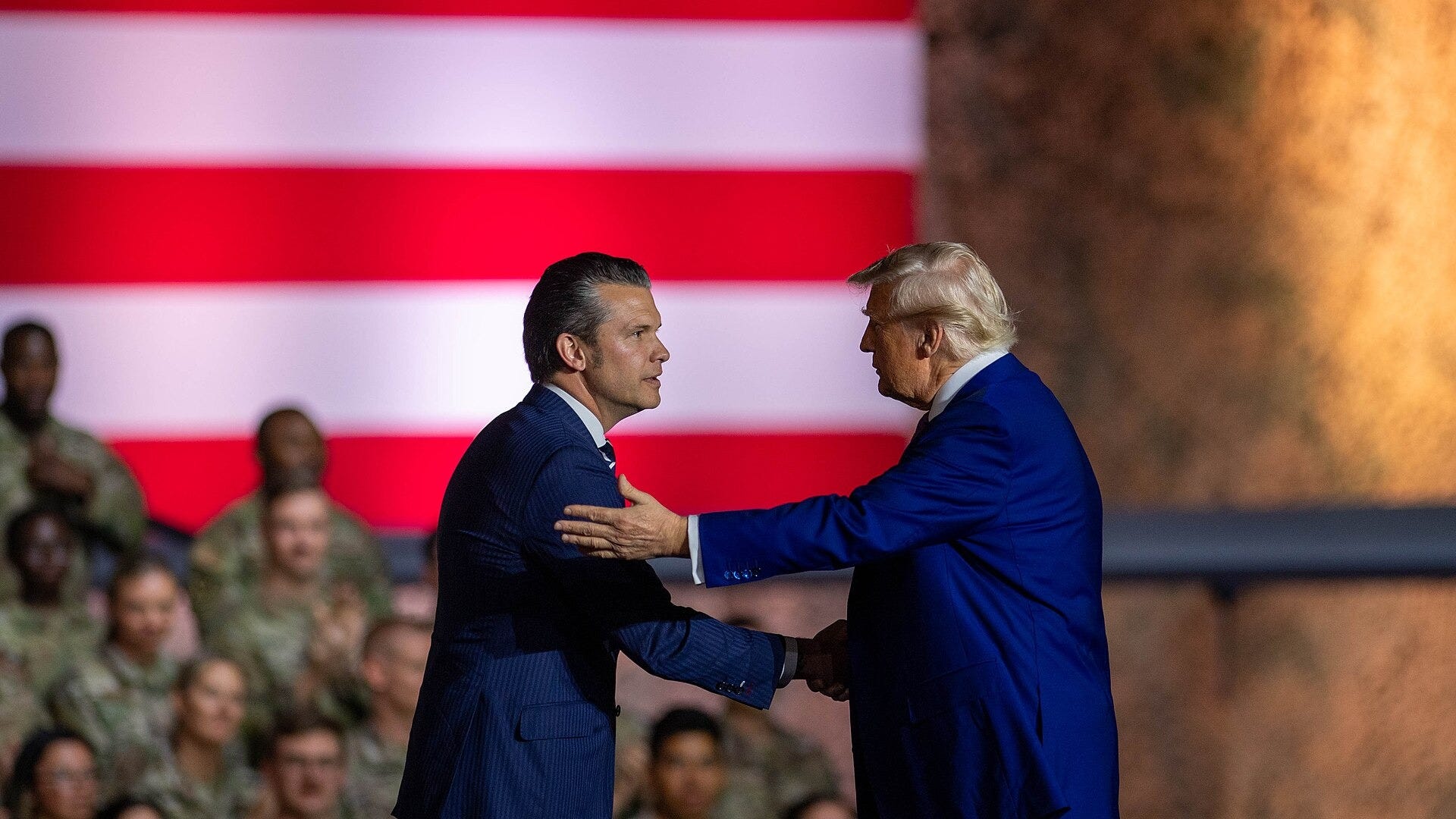
Strategy requires patience, discipline, and a clear understanding of consequences. Trump’s approach to Iran has demonstrated the opposite: impulsive decisions, shifting objectives, discarded diplomacy, and faith in optimistic assumptions that war itself cannot make true.
I have been a student of military history nearly all my adult life. I spent 26 years in a US military uniform. I hold graduate degrees in both International Affairs and National Security Studies. I am a qualified military strategist to boot. I consider myself at least marginally qualified to call out Mr. Trump’s war with Iran as unnecessary, counter-productive, too costly, and ultimately, tragically idiotic. Yes, I am angry, and, I believe, with good reason.
Unnecessary
Over a 20 month period of formal negotiations, in consultation with key allies, the Obama Administration successfully negotiated the signing of the JCPOA (Iran Nuclear Deal) in 2015. Before Mr. Trump foolishly chose to toss the deal in the shredder in 2018, the agreement, with which Iran had theretofore fully complied, successfully reduced and restricted Iran’s nuclear program, and put in place an unprecedented verification regime by the International Atomic Energy Agency (IAEA). Mr. Trump, however, “reasoned” that the deal “gave too much for too little” because it “only” addressed Iran’s nuclear program, and promised at the time to “assemble a broad coalition of nations to deny Iran all paths to a nuclear weapon and to counter the totality of the regime’s malign activities.” Unsurprisingly Mr. Trump’s withdrawal from the deal eventually led Iran to walk away from the agreement and resume what it has always labeled a “peaceful nuclear program.”
War is supposed to be the act of last resort, when all other channels, diplomatic, informational, and economic means have been exhausted. The Administration undertook no serious diplomatic efforts, and were led by no one with any serious expertise or background with Iranian issues. “Coalition building” was limited to Israel and Iran’s Gulf neighbors. So, yes, this war was unnecessary.
Counter-Productive
The surprise air and ensuing military attacks America and Israel have conducted against Iran since February 28 have proven to be ultimately ineffective at fully achieving any of Mr. Trump’s shifting, stated goals.
Iran’s expertise and capability to one day build an atomic device still exists.
There has been no regime change.
The Iranian military’s capabilities have been degraded, but they remain capable of striking objectives in Jordan, Kuwait, Bahrain, UAE, Iraq, Qatar, and Oman.
The military action prompted Iran to close the Strait of Hormuz; it is still closed.
Now, and months into the conflict, the strategic leverage resides with the Iranians. The current expanded US bombing campaign serves only to harden Iranian resistance. So yes, this war is counter-productive.
Costly
The costs of conducting the war against Iran are calamitous. First and foremost, American military personnel and Iranians have suffered the loss of life and limb. The economic impact of war on our own nation is significant: As confirmed by Defense Secretary Pete Hegseth to Congress, $37.5 billion has been officially spent or projected through September 30, 2026, . Independent data from Moody’s Analytics indicates that as of this month, the conflict has cost roughly $1,100 per American household when factoring in defense spending alongside broader spikes in domestic fuel, borrowing, and grocery costs. The economic blow to our allies and trading partners, whom Trump deemed unnecessary to consult or warn before he launched this war, is also significant, and with the extended closure of the Strait of Hormuz, the negative economic effects are now global.
America, along with Israel, is perceived as the aggressor in this conflict by multiple nations, further negatively impacting our reputation abroad. Plus, while America is embroiled in Iran, its partner Israel has chosen to invade southern Lebanon and is now engaged in the process of illegally annexing portions of that country as a buffer zone, much as did in Gaza. It is also unlikely that the Arab Gulf States, who are bearing the brunt of Iranian bombing, will ever again trust in America’s security guarantees. So yes, this war is costly.
Tragically Idiotic
In an essay I wrote in March 2026, my strategic analysis of the war was meant to serve as a reminder that “America won every battle in Vietnam, Afghanistan, and Iraq. All three conflicts ended in defeat.” Mr. Trump is on a similar path. He has succumbed to his most prominent personal characteristic: his impulsive nature. His unhinged and mendacious late-night postings on his absurdly named “Truth Social” site provide dozens of examples. His impulses led him to believe the self-serving pre-war narrative provided by Israeli Prime Minister Benjamin Netanyahu and the US Secretary of “War,” testosterone-obsessed Mr. Hegseth, while ignoring the well-considered and sober analysis of other senior uniformed military advisers and that of the US intelligence community.
Yes. The war with Iran was clearly unnecessary, is counter-productive, and is too costly. It is tragically idiotic as well.

Robert Bruce Adolph , a qualified Military Strategist, is a retired senior US Army Special Forces soldier. He holds graduate degrees in both National Security Studies & International Affairs and was formally trained as a counterintelligence special agent. Robert also taught university level courses in American Government, US History, and World Politics. Following his retirement from the active military, he joined the UN, subsequently seeing service in Sierra Leone, Yemen, Iraq, Egypt, Israel/Palestine, Indonesia and more, culminating in the role of Chief of the Middle East and North Africa at UN Headquarters in New York. He is the author of “Surviving the United Nations,” now out in a second edition. He is a member of The Steady State.
Founded in 2016, The Steady State is a nonprofit 501(c)(4) organization of more than 400 former senior national security professionals. Our membership includes former officials from the CIA, FBI, Department of State, Department of Defense, and Department of Homeland Security. Drawing on deep expertise across national security disciplines, including intelligence, diplomacy, military affairs, and law, we advocate for constitutional democracy, the rule of law, and the preservation of America’s national security institutions.
 |
|
This analysis, based on a lifetime of experience in national security, is spot on. And much appreciated. If only the Republicans who are in control of the Senate and House would speak so honestly...something for American voters to keep in mind, come our Nov. 3 congressional elections.
Great piece. Perhaps Hegseth’s sole legacy will be to make Rumsfeld the 2nd worst defense secretary in history, just as Trump will make Carter the second worst president in dealing with Iran post Shah.