
When Questions Become Enemies
Attacks on journalists are teaching Americans to stop defending democracy’s first line of accountability.


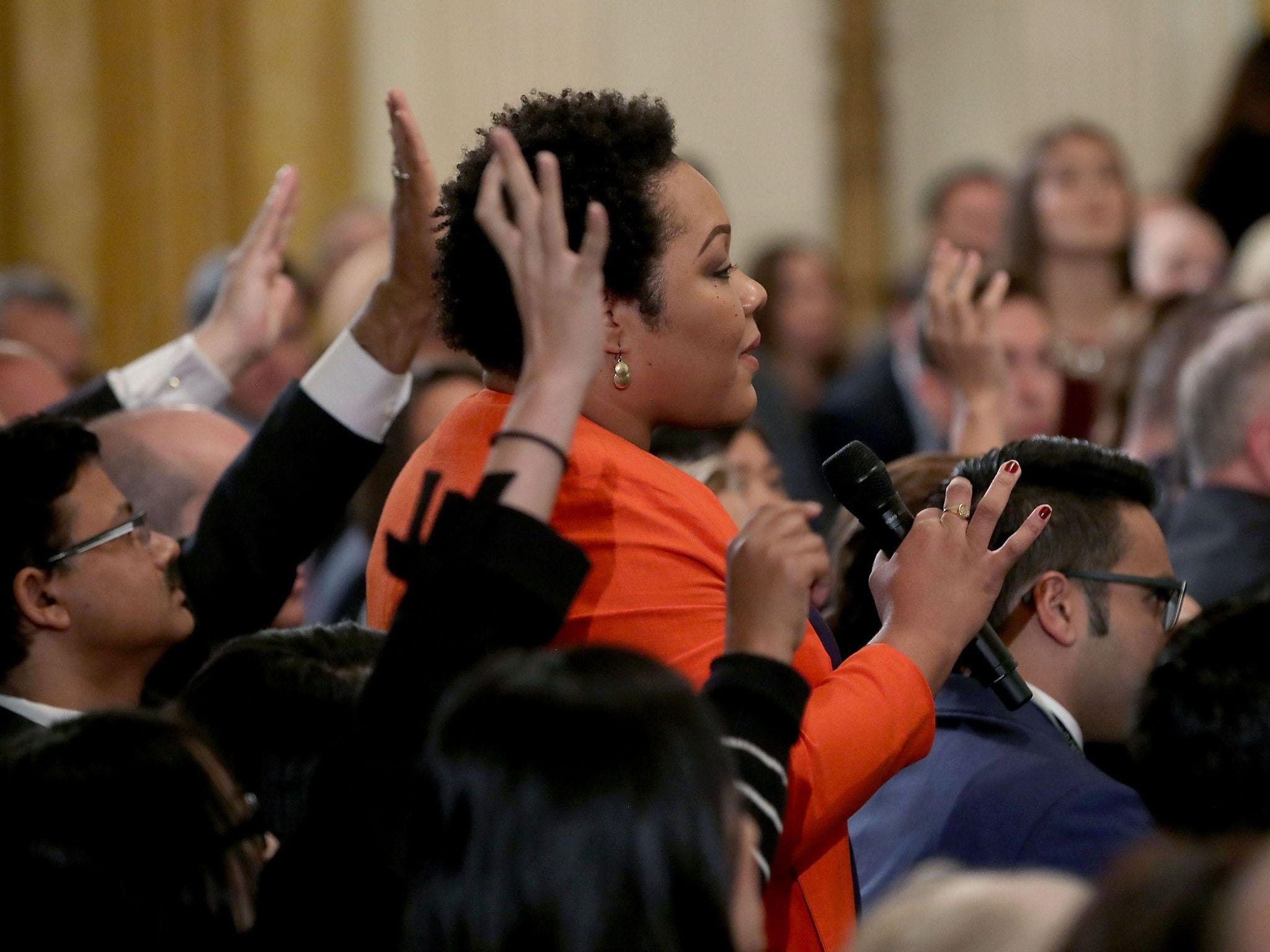
Yamiche Alcindor | Vogue
The danger is not merely that politicians insult reporters. It is that millions of citizens have become accustomed to it. Authoritarianism thrives when people lose confidence in the distinction between truth and falsehood—and attacks on the press are often where that process begins.
Every administration experiences tension with journalists. The relationship itself is inherently adversarial. Reporters are expected to ask uncomfortable questions, and presidents are expected to defend their policies and decisions. In many respects, democracy is strongest when that tension exists because accountability requires friction.
What becomes troubling, however, is not disagreement between presidents and reporters. It is the growing absence of public concern when, rather than answering difficult questions, presidents change the conversation, often attacking the questioner. The story becomes the nature of the attack on the journalist.
Recent exchanges involving NBC’s Kristen Welker and CNN’s Kaitlan Collins illustrate this tactic. In both cases, difficult questions were met not merely with disagreement but with personal attacks. Questions were interrupted. Motives were impugned. Expertise was dismissed. Networks were denounced. At times, appearances were mocked. The substance of the questions became secondary to the discrediting of the questioner.
This pattern is hardly new. Americans may recall the White House’s response when President Trump referred to a female reporter as “piggy.” In the Trump era, women journalists frequently bear a disproportionate share of these attacks. Female reporters, and especially women of color, often find themselves targeted in ways that go beyond professional criticism. Their appearance, intelligence, motives, and legitimacy.
Rather than expressing concern, officials have described such remarks as evidence that the President was simply being “frank and open.” In effect, Americans are told that there was nothing to see and nothing to worry about.
In and of itself, it’s outrageous behavior. But what should concern us most is not bad behavior. It’s the lack of outrage by other journalists and the citizenry over this diversionary tactic that is right out of the authoritarian playbook.
Authoritarian systems rarely begin by abolishing the press outright. More often, they seek to delegitimize it. Journalists become enemies rather than watchdogs. Uncomfortable questions become acts of hostility. Personal attacks replace answers.
Citizens gradually become accustomed to the idea that questioning power is itself suspect. In such an environment, attacks on journalists are not incidental; they are part of a broader effort to undermine the institutions that hold power accountable. Political theorist Hannah Arendt warned that authoritarianism succeeds not only by suppressing truth, but by destroying the common factual world upon which democratic self-government depends. Over time, the greater danger is not simply censorship, but the corrosion of a shared understanding of reality itself, as continual assaults on facts leave citizens uncertain about what to believe and increasingly vulnerable to narratives shaped by power rather than evidence.
Polling consistently shows falling confidence in major news organizations, indicating that this tactic is working. Some believe reporters are politically biased. Others believe the press has failed to challenge what should have been challenged. Many Americans have simply become exhausted by years of political conflict and have tuned out altogether. This is exactly the response a would-be authoritarian counts on.
The First Amendment protects newspapers, broadcasters, and journalists not because the Framers expected them to be popular, but because they understood that republics require institutions willing to question power. They expected tension. They did not expect obedience. Likewise, public officials who seek office must understand that being pressed with difficult questions is part of the job. Leaders are accountable to the people, and journalists serve as one of the mechanisms through which citizens obtain answers.
Democracy depends upon independent institutions, courts, elections, Congress, civil society, and a free press. These institutions were never designed to make leaders comfortable. They were designed to make concentrated power accountable. Americans do not have to agree with Kristen Welker. They do not have to admire Kaitlan Collins. They do not have to trust every news organization or approve of every story. But they should recognize that reporters asking difficult questions are performing a constitutional function in addition to seeking answers to questions that many Americans want to hear, and not committing an offense.
The measure of a free society is not how it treats friendly voices. It is how it treats those who ask inconvenient questions. Perhaps the most revealing question raised by these confrontations is not what they say about a president. It is what our silence says about us. Because when attacks on independent institutions become routine, and citizens cease to notice, the alarm bells democracy depends on may grow faint. A citation by Arendt provides an appropriate closing: “The ideal subject of totalitarian rule is not the convinced Nazi or the convinced Communist, but people for whom the distinction between fact and fiction, true and false, no longer exists.”
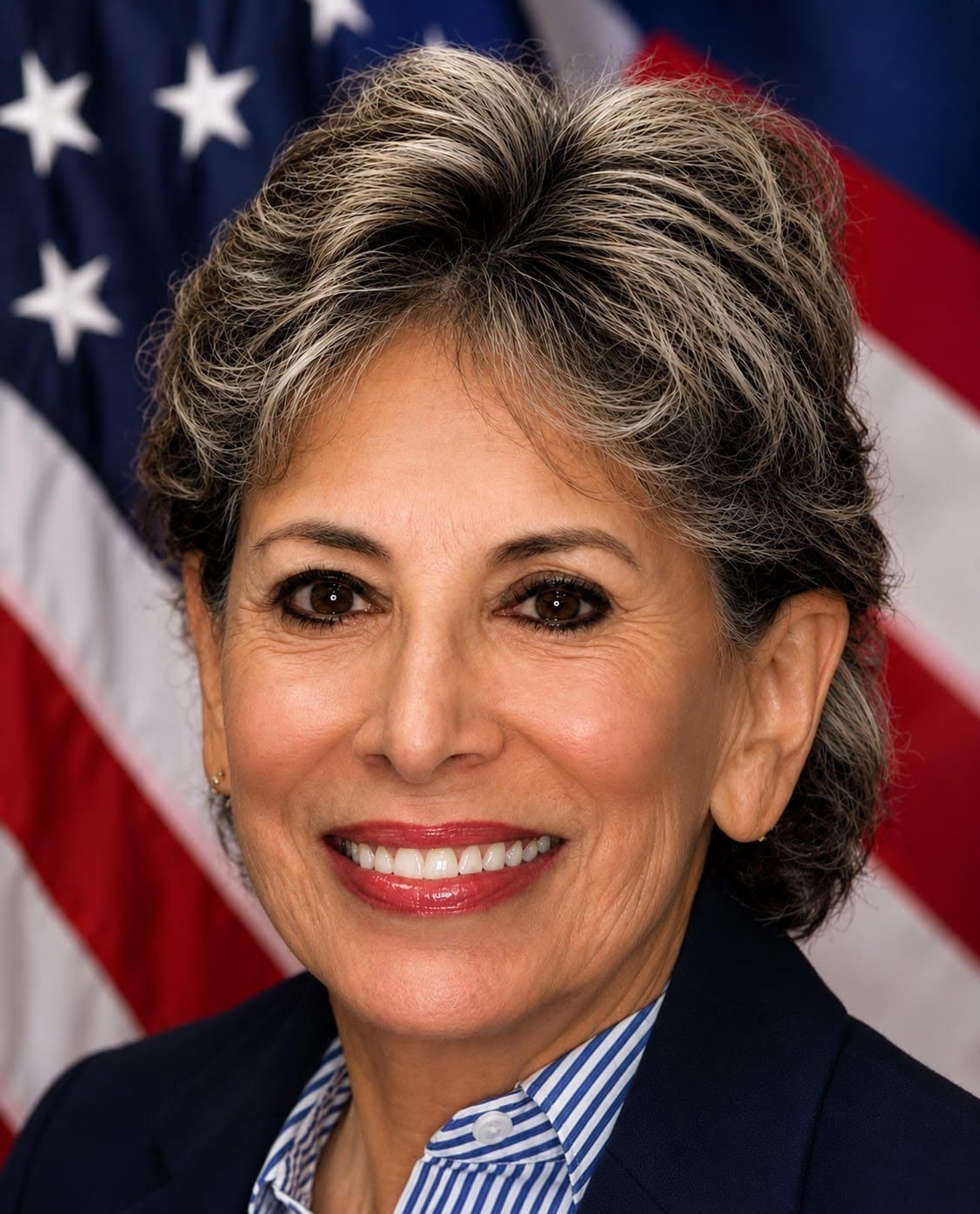
Martha Duncan is a retired U.S. Department of Defense senior executive with 37 years of service, including 23 years as an officer in the U.S. Army Reserves, where she also had three operational deployments to Panama, Bosnia, and Afghanistan. At the Defense Intelligence Agency (DIA), she worked as a Latin American analyst for 11 years. A specialist in human intelligence (HUMINT); she is recognized for her leadership in intelligence operations, coalition-building, and enterprise-level policy development across DIA, the U.S. Army, and the broader Intelligence Community. She is a member of The Steady State.
Bonnie D. Jenkins, Ph.D., is the former Under Secretary of State for Arms Control and International Security and has 22 years in the Air Force and Navy Reserves, retiring as a Naval Intelligence Officer. She also served as the Coordinator of Threat Reduction Programs at the Department of State with the rank of Ambassador. She is a specialist in arms control and nonproliferation of weapons of mass destruction, as well as in public international law. She is the Founder and Executive Director of Women of Color Advancing Peace and Security. She is a member of The Steady State.
Founded in 2016, The Steady State is a nonprofit 501(c)(4) organization of more than 400 former senior national security professionals. Our membership includes former officials from the CIA, FBI, Department of State, Department of Defense and Department of Homeland Security. Drawing on deep expertise across national security disciplines including intelligence, diplomacy, military affairs and law, we advocate for constitutional democracy, the rule of law and the preservation of America’s national security institutions.
 | A guest post by
|
 | A guest post by |
This is very important --- thank you! Donald Trump's threats to America's free press really are unprecedented in our country's history.
This is an excellent piece about how horrid Drumpf treats reporters because he has such thin skin. No one deserves the treatment he doles out. I would love to see someone ask him what is wrong with him that he can not be decent to people.Thank you for this post Jennie.