
When Things Get Tough, Rogues Start Wars
The Steady State | Charles A. Ray

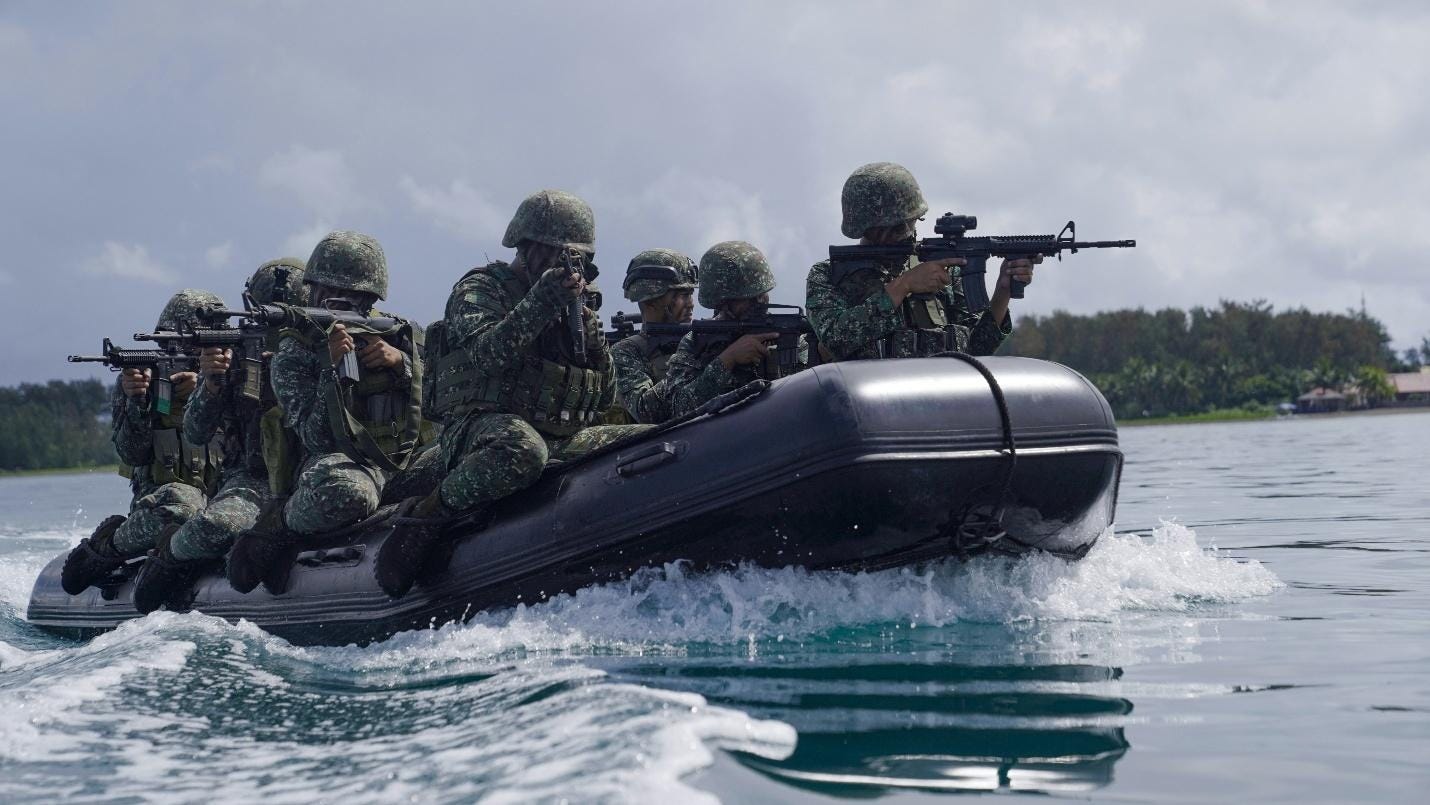
U.S. military actions in Venezuela could lead to wider regional conflict. (Photo by Angelito Catolos on Unsplash)
Diverting Attention from Domestic Problems
While autocrats seek dominion over their nations’ people, unlike bygone dictators such as Hitler and Stalin, direct military domination is not the strategic goal for today’s aspiring authoritarian rulers. To entrench their rule, most authoritarian leaders seek a degree of domestic legitimacy and support from large segments of their population, and one way they do so is by presenting themselves as defenders of their country against foreign enemies. This is especially the case when a wannabe autocrat suddenly finds himself facing problems and pushback domestically. At times like this, distracting the public with the specter of an external threat is often the go-to tactic.
This is, I believe, in large part what we’re seeing with operation ‘Southern Spear,’ a military operation announced on November 13 by Defense Secretary Pete Hegseth, to quash ‘narco-terrorists’ in the Western Hemisphere. This formal military mission is a continuation and expansion of the controversial military strikes against alleged drug-trafficking boats in the Caribbean and Pacific, which have killed at least 80 people since September. Pentagon planners have reportedly also briefed the president on potential land strikes inside Venezuela, the focus of the U.S. counternarcotics campaign, despite the fact that Venezuela is not the primary source of illicit drugs smuggled into the United States.
Stemming the flow of illicit drugs into the United States, the announced reason for these operations is a paper-thin justification for what many believe to be a violation of U.S. and international maritime law, and they’ve not been shown to stop or even slow the influx of drugs. While removing Venezuelan President Nicolas Maduro from power is clearly another one of the motives for U.S. actions, there have also been hints that Venezuela’s oil is at least a tertiary motive.
Still another motive for this obsession with amping up the U.S. ‘war on narco-terrorists’ that has received scant media attention is that it distracts from the many domestic problems the administration is facing. Among them are increased prices on consumer goods because of Trump’s fixation on tariffs, the blowback and ongoing issues from the longest government shutdown in history, a potentially unfavorable ruling on Trump’s tariffs by the Supreme Court, and, probably the biggest problem of all, the refusal of the Epstein files controversy to lie down and die.
After AG Pam Bondi backtracked on a promise to ‘release the Epstein client list’ early in the administration, and unsuccessful efforts by House Speaker Mike Johnson to delay a House vote on releasing files that it holds, information is coming to light that rebut many of Donald Trump’s claims about his relationship with the late Jeffrey Epstein, a convicted sex offender and human trafficker. All this has caused fractures in the MAGA movement, with some former diehard Trump supporters like Georgia Representative Marjorie Taylor Greene breaking with Trump and calling for the immediate release of all of the files.
At this point, connecting Trump’s ‘Epstein problem’ with “Southern Spear” is only speculation, but it is an action right out of the authoritarian playbook. It would appear that the administration is playing the odds, despite slightly more than half of Americans opposing the military strikes. The public reaction to the operations is highly partisan. Overall, 51 percent oppose and 29 percent support, but when politics is considered, the results differ markedly. Among Republicans, 58 percent support, and 27 percent oppose, while 76 percent of Democrats oppose and only 8 percent support. Trump claims the operation does not need approval from Congress, a position that has not been tested in court and that the GOP-controlled legislature hasn’t weighed in on.
This high-profile, high-stakes military move does somewhat divert attention from the domestic Epstein firestorm. But it also poses the risk of a wider Caribbean conflict and the creation of a more chaotic region that could pose more danger than the current drug traffic.
The longest government shutdown in U.S. history has ended—for now—but it appears that the fat lady has yet to sing.
Charles A. Ray spent 20 years in the U.S. Army with two tours in Vietnam. He retired as a senior US diplomat, serving 30 years in the U.S. Foreign Service, with assignments as ambassador to the Kingdom of Cambodia and the Republic of Zimbabwe, and was the first American consul general in Ho Chi Minh City, Vietnam. He also served in senior positions with the Department of Defense and is a member of The Steady State.
Founded in 2016, The Steady State is a nonprofit 501(c)(4) organization of more than 360 former senior national security professionals. Our membership includes former officials from the CIA, FBI, Department of State, Department of Defense and Department of Homeland Security. Drawing on deep expertise across national security disciplines including intelligence, diplomacy, military affairs and law, we advocate for constitutional democracy, the rule of law and the preservation of America’s national security institutions.
Well said, Charles. Thanks for your spot on articulation of this multifaceted and problematic issue. I’m not sure I’d drop oil to tertiary, but clearly it’s a leading contender. I only raise this point because, if oil is actually a leading reason, then we are looking at a much longer and more deeply entrenched operation, which would have significant domestic implication. I can’t help thinking the Narco terrorism theme is just a smoke screen for oil and revenue. I expect the next couple of weeks will be telling. Thanks for chiming in on this.
Well-reasoned, as usual. As the ambassador points out, this is International Studies 101: when authoritarians run into domestic difficulties, they divert attention with a foreign adventure. We’re seeing a demagogue play to the worst instincts of his base.