
Trust Me. I’m Lying
The dangerous paradox at the heart of authoritarian rule


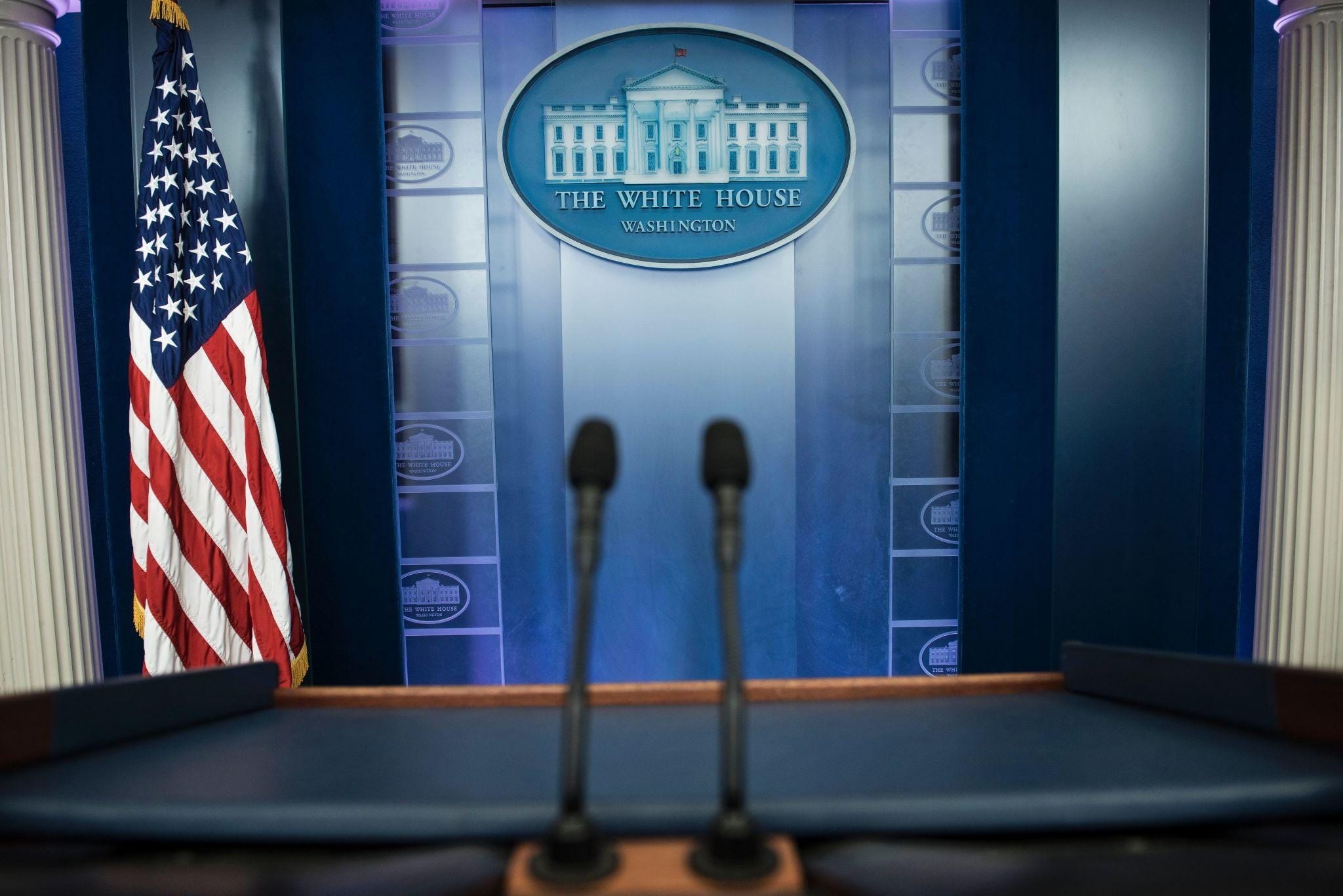
The same deception that helps autocrats gain power eventually undermines their ability to govern. By destroying truth, the autocrat destroys trust, forfeiting the ability to lead effectively when the nation needs leadership most.
One of the fundamental weaknesses of authoritarian leaders is also one of their defining characteristics: they lie.
They lie about election results. They lie about economic performance. They lie about corruption. They lie about opponents, critics, judges, journalists, and experts. They lie because the maintenance of personal power requires the manipulation of reality. Truth becomes not an objective fact to be discovered, but a tool to be shaped and deployed in service of the ruler.
At first, this appears to work. A disciplined propaganda apparatus can create the illusion of strength. Loyal supporters repeat approved narratives. Critics are marginalized or intimidated. Independent institutions that might challenge falsehoods are weakened. The autocrat appears omnipotent.
And, within such a government, information flows upward slowly because subordinates fear delivering bad news. Statistics are manipulated to please superiors. Problems are concealed until they become impossible to hide. Leaders make decisions based on distorted information, while citizens struggle to determine which official statements, if any, can be trusted.
Therein lies a profound vulnerability.
Trust is among the most valuable forms of capital a nation possesses. It cannot be manufactured by decree. It cannot be compelled through fear. It is accumulated slowly over years and decades through honesty, competence, and consistency. Once squandered, it is extraordinarily difficult to recover. Autocrats spend that capital recklessly. Every false statement, every fabricated threat, every invented conspiracy, every manipulated statistic extracts a little more from the national reservoir of trust. Eventually, citizens cease to know what is true. More importantly, they cease to believe what their leaders say.
This becomes dangerous during ordinary times. It becomes catastrophic during crises. Ironically, many authoritarian leaders are drawn particularly to their role as Commander in Chief; it permits them to cultivate images of strength, decisiveness, and personal dominance. They promise that only they can protect the nation. They portray themselves as uniquely capable of leading during emergencies. Yet the moment of crisis is precisely when their greatest weakness is exposed.
Effective Crisis Leadership Depends on Trust.
When a nation faces war, terrorism, natural disaster, economic collapse, or public health emergency, leaders must often ask citizens to accept sacrifice. They may ask people to change their behavior, endure hardship, conserve resources, evacuate danger zones, or support difficult national decisions. Such requests cannot be enforced everywhere, all at once. They depend heavily upon voluntary cooperation. Voluntary cooperation depends upon trust.
Citizens must believe that their leaders are telling the truth about the nature of the threat. They must believe that the information they are receiving is accurate. They must believe that sacrifices are necessary and that burdens are being shared fairly. A leader who has spent years poisoning the well of public trust suddenly discovers that credibility cannot be manufactured at the moment it is needed most.
And the “trust” problem extends beyond the general population. It affects the leader’s own supporters.
Many observers assume that authoritarian movements create unusually disciplined followers. The opposite is often true in a crisis. Because such movements have been built upon narratives rather than facts, their supporters become accustomed to selecting information based on loyalty rather than evidence. They have come to believe that inconvenient truths are “fake,” that experts are enemies, and that reality itself is negotiable. This may strengthen political cohesion in the short term. In a crisis, however, it becomes a liability.
When the leader confronts a genuine threat and is faced with explaining hard and obvious facts, followers have little reason to know when they should believe him. They have been trained to trust personality rather than evidence. They have been taught that facts are merely weapons in a political contest. Distinguishing genuine warnings from propaganda becomes increasingly difficult. The result is confusion, fragmentation, and paralysis.
The consequences can be measured in military defeats, economic disasters, public health failures, and social instability. The autocrat’s dilemma is unavoidable. To gain and maintain power, the ruler increasingly depends upon falsehood. Yet every falsehood continues to weaken the very foundation necessary for effective leadership during a national emergency. The techniques that help secure personal power simultaneously undermine the capacity to govern.
At that point, the nation faces a profound danger. Not simply because its leaders are dishonest, but because dishonesty has become normalized. The public, including former followers, no longer knows whom to believe. The government no longer knows what information is reliable. Even genuine warnings may be dismissed as propaganda.
To gain and maintain power, the ruler increasingly depends upon falsehood. Yet every falsehood weakens the very foundation necessary for effective leadership during a national emergency. The techniques that help secure personal power simultaneously undermine the capacity to govern.
In this sense, lies are more than a moral failing. They are a national security vulnerability.
The Commander in Chief who spends years teaching citizens not to trust institutions, experts, journalists, and teaching the public not to believe him, eventually discovers that they have learned the lesson too well.
The most dangerous words a nation can hear are not “Nobody believes the government.” They are: “Nobody knows what to believe.”
Steven A. Cash served as a prosecutor in the Manhattan District Attorney’s office before joining the CIA in 1994 as Assistant General counsel and subsequently serving as an intelligence officer in the Directorate of Operations. In 2001 he joined the Senate Select committee on Intelligence as Counsel and designee-staffer to Senator Diane Feinstein). He later served as a senior staffer in the House Select Committee on Homeland Security, the Department of Energy, the Senate Judiciary Subcommittee on Terrorism, Technology and Homeland Security and the Department of Energy. In the private sector he has advised on national security, counterintelligence, and technology policy and served on the Biological Sciences Experts Group under the Director of National Intelligence. Mr. Cash is currently the Executive Director of The Steady State.
Founded in 2016, The Steady State is a nonprofit 501(c)(4) organization of more than 400 former senior national security professionals. Our membership includes former officials from the CIA, FBI, Department of State, Department of Defense, and Department of Homeland Security. Drawing on deep expertise across national security disciplines, including intelligence, diplomacy, military affairs, and law, we advocate for constitutional democracy, the rule of law, and the preservation of America’s national security institutions.
 | A guest post by
|
It seems to me that Americans have failed to teach critical thinking and have failed to use critical thinking. The existence of an audience for Fox News proves this failure.
I second the Amen! Thank you for articulating the crisis of trust we face. We have a long road ahead of us to restore this essential human need.