
When Intelligence Becomes an Election Weapon
How raw intelligence, stitched together and without normal analytical safeguards, was presented as the foundation for an unprecedented claim of presidential authority over American elections.


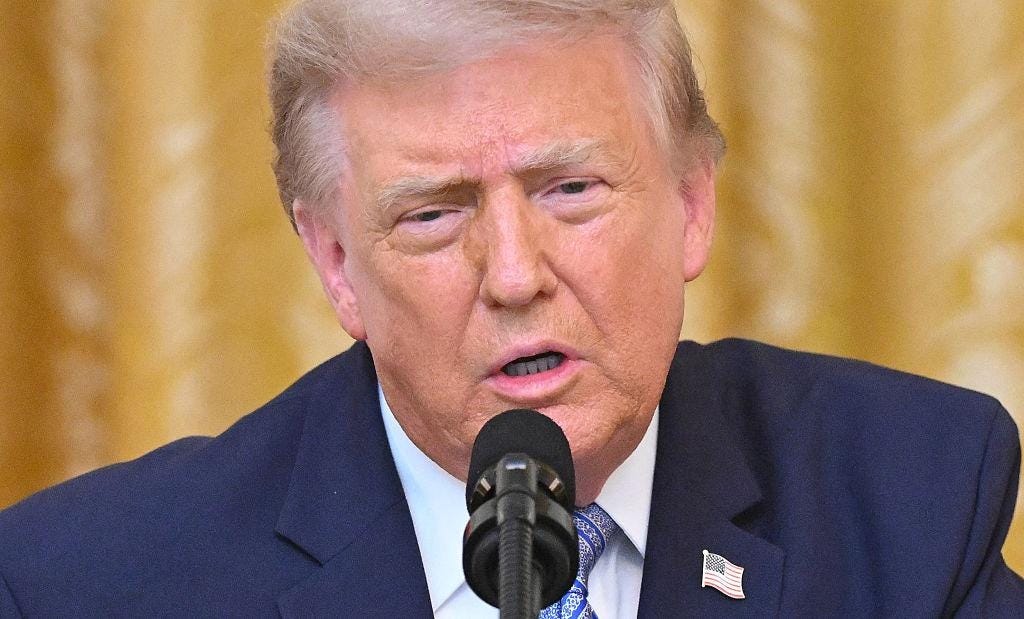
Address to the Nation, July 16, 2026
The Trump Administration is not simply arguing for tougher election rules. It is constructing a national security rationale for federal control over election administration—using intelligence products that appear to have bypassed the professional analytical process designed to prevent politicization.
Three weeks after President Trump’s July 16 address on election security, the immediate controversy over the speech has begun to fade. The strategy it announced has not. The Administration continues to seek to compel states to administer federal elections under nationally prescribed voting rules—through the SAVE Act where possible and through executive action where it is not.
In a recent Washington Spectator article, I examined the Administration’s broader strategy for invoking national security authorities to compel states to conform their administration of federal elections to voting rules that Congress has thus far declined to enact.
Here I focus on one core question: the Administration’s abuse of intelligence to establish the asserted factual predicate for that strategy.
The President’s address relied heavily on intelligence materials released under the authority of Acting Director of National Intelligence Bill Pulte. They were presented as showing that foreign governments had penetrated American election infrastructure, that intelligence officials had concealed the true scope of foreign election interference, and that extraordinary federal action was therefore required. Together, they supplied the asserted factual predicate for compelling states to administer federal elections under voting rules Trump has publicly said would “guarantee” the Republicans the midterms.
That predicate appears to have been built from raw intelligence stitched together outside normal analytical channels for use in the President’s address. Following the speech, former intelligence professionals affiliated with The Steady State examined one of the principal documents highlighted by the White House. They concluded that it lacked many of the characteristics ordinarily associated with a formal CIA analytical product: no identifiable author, office, date, serial number, sourcing methodology or evidence of established analytic review. Instead, it appeared to be a compilation of raw reporting assembled outside normal CIA analytical channels, strongly suggesting that intelligence had been politicized. They called for investigations by the congressional intelligence committees and the relevant inspectors general.
The use of politicized intelligence followed a sustained campaign against the intelligence community itself.
Early in her tenure, Director of National Intelligence Tulsi Gabbard began restructuring the Office of the Director of National Intelligence around the Administration’s priorities, promising to cut its staff by 50%. She then created a special Director’s Initiatives Group to investigate alleged “weaponization“ by previous administrations, removed the acting chairman of the National Intelligence Council, Mike Collins, and his deputy, Maria Langan-Riekhof, personally accompanied (at Trump’s request) the FBI during the seizure of voting records in Fulton County, Georgia, as part of the Administration’s continuing effort to revisit the 2020 election, and revoked the security clearances of dozens of former intelligence and national security officials.
When Gabbard resigned at the end of June, Trump immediately appointed Bill Pulte as Acting Director of National Intelligence. Pulte brought no significant intelligence or national security experience to the office. Pulte was best known for referring several prominent political opponents of the President for criminal investigation while serving as Director of the Federal Housing Finance Agency. Key Senate Republicans opposed making Pulte the permanent Director of National Intelligence, with Senate Majority Leader John Thune warning publicly that the country did not need a “weaponized DNI.”
Within days of assuming office, Pulte removed additional intelligence personnel while accelerating the Administration’s effort to reshape and reduce ODNI. He then oversaw the assembly and release of the intelligence materials used to support a presidential address asserting that national security concerns justified compelling states to conform their election administration to the President’s preferred rules.
Steve Bannon’s contemporaneous description of the strategy is noteworthy. Two weeks after the July 16 address, Bannon predicted that President Trump would declare a national emergency on election integrity by the end of August, explaining, “The predicate is being laid perfectly—this is why Pulte is so important.”
For generations, intelligence has been used to assess foreign threats. The July 16 address suggested a different role: using intelligence as the asserted factual predicate for expanding presidential authority over the domestic administration of elections after Congress had thus far declined to enact the SAVE Act.
If Trump continues to portray American elections as an ongoing national security emergency, the intelligence assembled over the summer could become the asserted basis for additional executive measures seeking to control the conduct of the 2026 midterm elections. This is the scenario senior Administration allies are publicly describing. If that occurs, intelligence will have been transformed into a pretext for using asserted national security powers to displace the states’ administration of federal elections with presidential control.
Jonathan M. Winer is the former Special Envoy for Libya and Deputy Assistant Secretary of State for International Law Enforcement and a Distinguished Diplomatic Fellow at MEI. He is a member of The Steady State.
Founded in 2016, The Steady State is a nonprofit 501(c)(4) organization of more than 400 former senior national security professionals. Our membership includes former officials from the CIA, FBI, Department of State, Department of Defense, and Department of Homeland Security. Drawing on deep expertise across national security disciplines, including intelligence, diplomacy, military affairs, and law, we advocate for constitutional democracy, the rule of law, and the preservation of America’s national security institutions.
 | A guest post by
|
I was surprised as I researched this piece just how active Trump and the Trump Administration have been over the past six weeks in setting up the predicates, substantive and institutional, for taking action to interfere with and to seek to control the outcomes of the Midterm elections in November, in violation of basic Constitutional norms. One important question will be whether the Roberts Court chooses to suspend or overturn any such actions on Constitutional grounds should Trump, Blanche, Patel, Hegseth, Mullin, and the DNI's new head, Jay Clayton, follow through with the kind of steps Steve Bannon has predicted would be initiated as early as the last week of August, such as Trump declaring a national emergency regarding the elections to justify the Trump Administration taking further efforts to implement federal control over them, and to threaten anyone who may try to get in the way.
Jonathan thank you for a very clearly explained danger we are facing with this criminal regime. We have to have the elections and we HAVE to vote in order make it such a large number it can not be contested. The court's are giving orders and people in this regime are not following court orders. It is insane.